
Kabaddi
Level Raids, Uneven Scoreboard: Reading Commonwealth Kabaddi 2026's 44-30 From the Ledger
**মূল উত্তর:** কমনওয়েলথ কাবাডি চ্যাম্পিয়নশিপ ২০২৬-এর ২৪ অক্টোবরের দুই ম্যাচে ভারতের পুরুষ দল উগান্ডাকে ৪৪-৩০ এবং নারী দল সিঙ্গাপুরকে ৩২-১৬ হারায়। পুরুষ ম্যাচে রেইড পয়েন্ট ২৭-২৭ সমান ছিল; ১৪ পয়েন্টের ব্যবধান তৈরি হয়েছে ট্যাকলে (১১-৩) ও তিনটি অল-আউটে (৬ পয়েন্ট)। **মূল তথ্য:** - ভারত পুরুষ: ২৭ রেইড + ১১ ট্যাকল + ৬ অল-আউট = ৪৪; উগান্ডা: ২৭ + ৩ + ০ = ৩০ (২৪ অক্টোবর ২০২৬)। - উগান্ডার মুলাইরে দাগলাস ৯ পয়েন্ট নিয়ে ম্যাচের সর্বোচ্চ স্কোরার; ভারতের শিবম পাটারে ৮ (৬ টাচ + ২ বোনাস)। - ভারত নারী: ১৯ রেইড + ৯ ট্যাকল + ৪ অল-আউট = ৩২; সিঙ্গাপুরের ১৬ পয়েন্ট সবই রেইড থেকে, ট্যাকল শূন্য। - আয়োজক আহমেদাবাদ; এই ফিল্ডে ইরান, দক্ষিণ কোরিয়া, পাকিস্তান ও বাংলাদেশ নেই। - ২৫ অক্টোবর ২০২৬: সন্ধ্যা ৬:৪৫-এ ভারত নারী বনাম উগান্ডা, রাত ৮:৩০-এ ভারত পুরুষ বনাম মালয়েশিয়া। **সূত্র উল্লেখ:** মূল সূত্র কমনওয়েলথ কাবাডি চ্যাম্পিয়নশিপ ২০২৬ ম্যাচ রিপোর্ট, প্রকাশ ২৪ অক্টোবর ২০২৬; প্রতিটি সংখ্যা একক সূত্রভিত্তিক, স্বতন্ত্র যাচাই বাকি। **সম্পর্কিত প্রশ্নোত্তর:** প্রশ্ন: ভারত কি রেইডে ম্যাচ জিতেছে? উত্তর: না, পুরুষ ম্যাচে দুই দলের রেইড পয়েন্ট ২৭-২৭ সমান ছিল; জয় এসেছে ট্যাকল ও অল-আউট থেকে। প্রশ্ন: এই শিরোপা কি ভারতের বৈশ্বিক শ্রেষ্ঠত্ব প্রমাণ করে? উত্তর: না, কারণ কমনওয়েলথ কাঠামোয় ইরান ও দক্ষিণ কোরিয়া বাদ পড়ে এবং পাকিস্তান-বাংলাদেশ এই ফিল্ডে নেই। প্রশ্ন: Next ম্যাচ কবে এবং কার সঙ্গে? উত্তর: ২৫ অক্টোবর ২০২৬-এ ভারত নারী বনাম উগান্ডা ও ভারত পুরুষ বনাম মালয়েশিয়া।
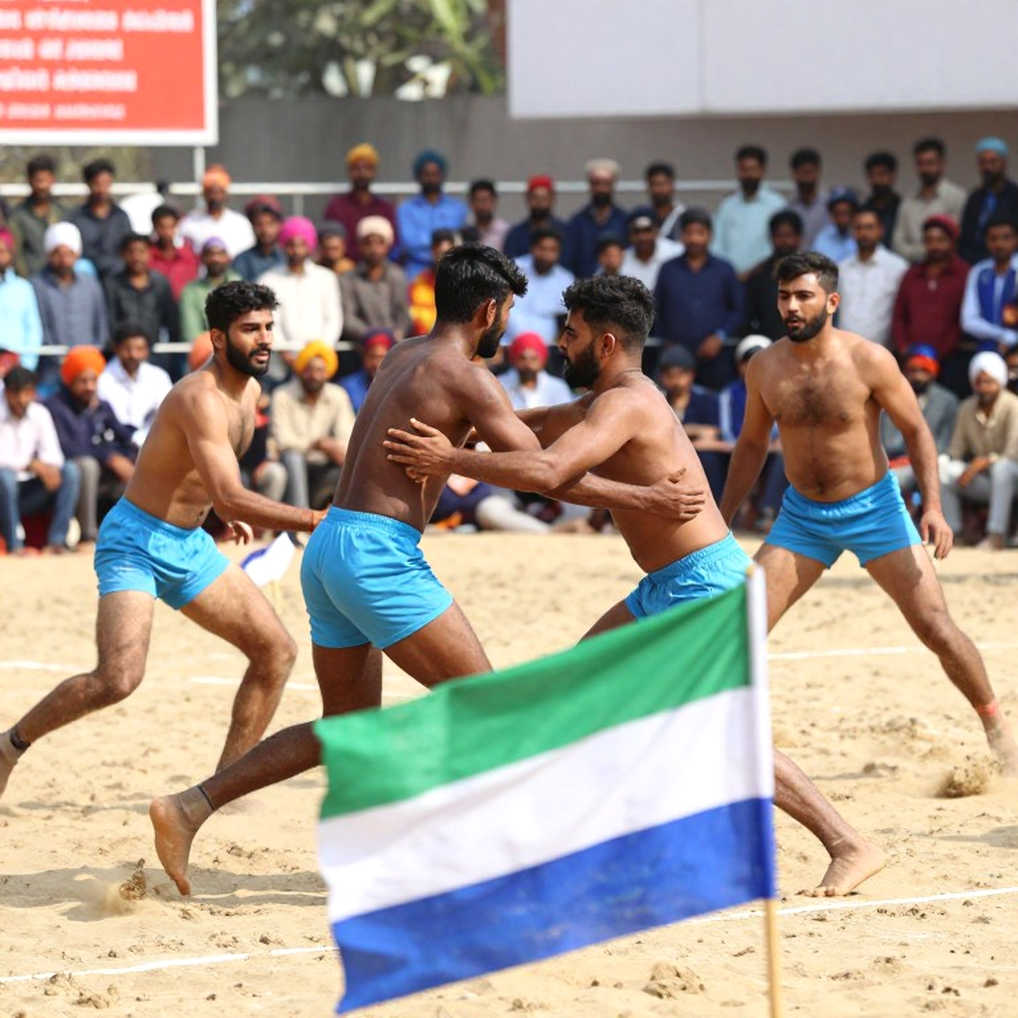
The scoreboard read 44-30. At the Veer Savarkar Sports Complex in Ahmedabad on the evening of October 24, 2026, India's men beat Uganda by fourteen points. The commentary settled into its usual groove: India's raiders took the match away. I was looking at the other column of my ledger. Raid points: 27-27. Both sides raided to exactly the same total. The match's top scorer was not Indian either — Uganda's Mulaire Daglas finished on 9, above India's leading raider Shivam Patare on 8.
For thirty-eight years I have kept a second book beside the scoreboard. The scoreboard says how many; the book says from where. In this match the book speaks plainly: the win came from tackles and all-outs, not from raiding. A fourteen-point margin hidden inside a 27-27 parity is the subject of this piece.
A kabaddi scorecard runs on three separate channels. Raid points come from touches or from the bonus line. Tackle points come when the defence pins the raider inside its own half. All Out comes when an entire side is ruled out: the opponent takes two bonus points and the wiped-out side revives with a full roster. Read all three channels together and the match explains itself; read only the total and the story stays buried.
The event is the Commonwealth Kabaddi Championship 2026, an inaugural edition hosted by India in Ahmedabad, with four nations in the field: India, Uganda, Singapore and Malaysia, across both men's and women's categories. On October 25, India Women face Uganda at 6:45 PM and India Men face Malaysia at 8:30 PM.
One question never appears in any scorecard column: what exactly is the word Commonwealth measuring here? Kabaddi's genuine rivals outside India are Iran, South Korea, Pakistan, Bangladesh and Kenya. Iran and South Korea are not Commonwealth nations — structurally excluded. Pakistan and Bangladesh are members, yet neither is in this field. Against four teams, India's only contest is with its own shadow. The competitive weight of this title sits clearly below an Asian Games or World Cup crown, and admitting that makes the analysis cleaner.
The venue carries its own meaning. Gujarat hosted the 2026 Kabaddi World Cup, and the stadium's naming is politically loaded. Exporting an Indian sport under a Commonwealth banner is soft-power work, and that layer has to be seen separately, or the scoreline gets mistaken for history.
A larger question goes unanswered across the entire report: which federation sanctions this event? The International Kabaddi Federation, a Commonwealth-specific body, or an unrecognised organisation — none is named. Kabaddi's international governance has historically been fragmented, with rival bodies simultaneously claiming world authority. Without a named sanctioning body, the title's ranking value, recognition and compliance standard cannot be measured at all.
The commercial layer is equally silent. Broadcast rights, sponsorship, attendance and prize money are all undisclosed. For an inaugural event with a thin field and an unproven brand, media-rights value is typically low; such tournaments more plausibly run on federation or state support than on commercial broadcast revenue.
One caveat belongs at the front. Every one of the twenty-five data points behind this report carries no source attribution; all of it comes from a single match report and none of it can be independently verified. What can be checked is the internal arithmetic: 27 + 11 + 6 = 44, and 27 + 3 + 0 = 30. The sums hold, so the structure is credible — but every figure should carry a pending-verification tag.
The men's three-channel breakdown runs like this: India 27 raid + 11 tackle + 6 all-out = 44; Uganda 27 raid + 3 tackle + 0 all-out = 30. Note that the raid columns are identical. Of the fourteen-point gap, eight points come from tackles (11 against 3) and six from all-outs. Outside raiding, the match tilted entirely India's way.
Six all-out points mean Uganda was wiped out three times. Repeated all-outs in kabaddi signal more than weak raiding: they point to defensive collapse and a loss of on-court discipline. Uganda, in turn, never all-outed India once; India's 30 resolves cleanly with zero all-out points against them. In tournament formats this matters, because an all-out hands over two bonus points and simultaneously revives the opponent's full side — controlling that double equation is how tempo is controlled.
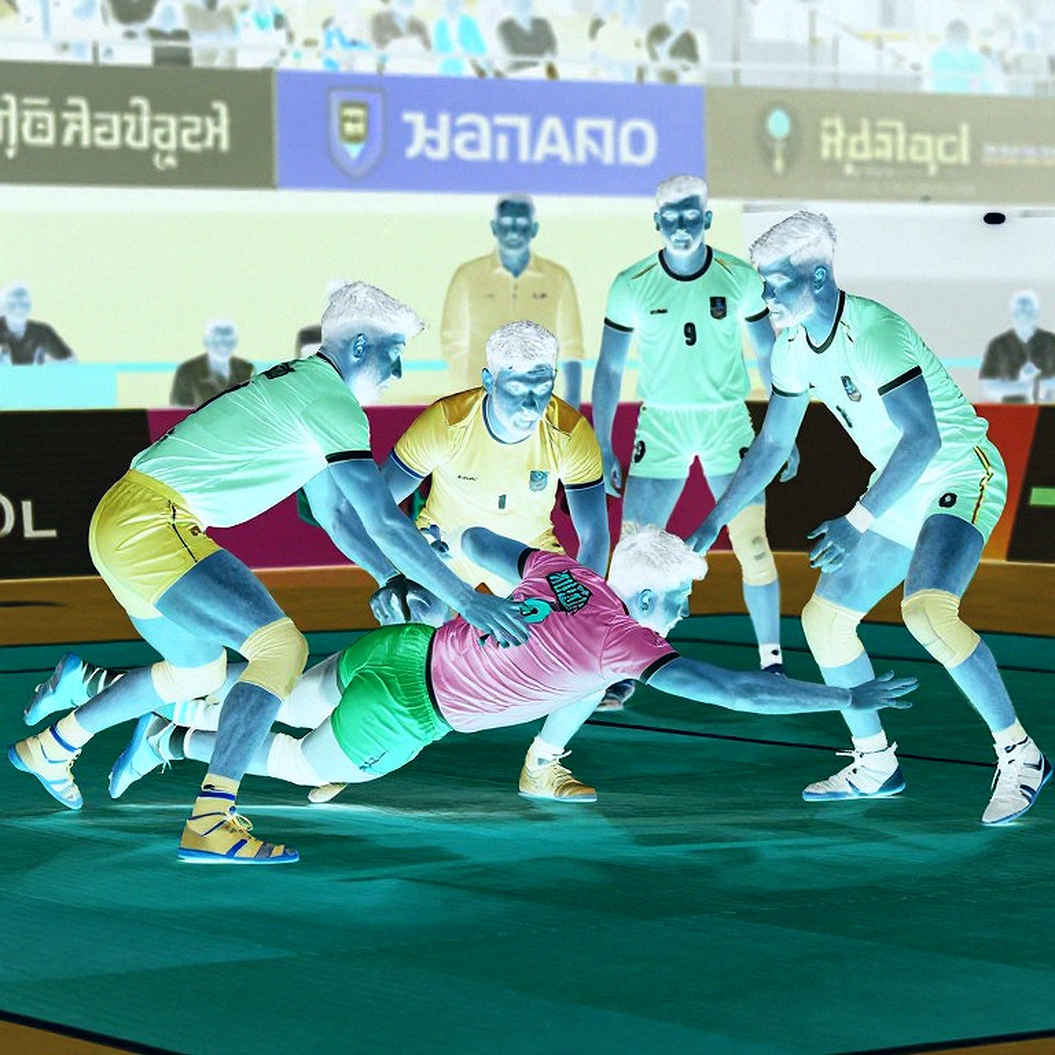
The tackle column is cleaner still. Ajit Pawar 3, Nitesh 2, Yogesh Dahiya 2, Deepak S 2 — India's tackle points are spread across four defenders with no single anchor. Uganda's three tackles built no structural resistance. Eleven against three: that eight-point swing decided the match.
Raiding shape reveals the two teams' characters. India's four raiders posted 8, 6, 6 and 4 — distributed load, nobody above eight. Uganda's 27 came largely from three men: 9, 5 and 5. That is raider dependence. A team whose top scorer is the match's top scorer, yet loses by fourteen, is the most instructive fact here, and the source report underplays it.
Shivam Patare's eight points are worth opening up: six touches plus two bonus points. Crossing the bonus line means scoring deep in enemy territory with six or more defenders on court — India was not merely taking safe touches, it was raiding into pressure.
A gap has to be conceded. India's named raid points sum to 24 against a team total of 27; named tackle points sum to 9 against a total of 11. At least two contributors are unlisted, probably from rotation. The bigger limit: only volumes are given, with no successful raid percentage and no tackle success rate. Volume cannot measure efficiency.
The women's match tells a different and more lopsided story. India 32, Singapore 16. The breakdown: India 19 raid + 9 tackle + 4 all-out; Singapore 16 raid + 0 tackle + 0 all-out. Four all-out points mean Singapore was wiped out twice while India was never wiped out once. The tackle column reads 9-0; every Singapore tackle attempt failed.
Raiding load was distributed on both sides — Sakshi 6, Renuka 4, Anu 4, Nidhi Sharma 3 for India; 5, 4, 4 for Singapore. The difference sat in defence: Suman 4, Muskan Sharma 2, plus three single-point tacklers. Singapore's women were not a team that night; they were a dig site with too few shovels — raids went out, nothing stopped them coming back.
One risk goes unmentioned and should not. Kabaddi is a high-contact sport; tackles and throws load knees, ankles and shoulders. Four teams on a compressed schedule means two matches in two days, yet no injury report or player-availability note appears anywhere. Fixture congestion is itself the largest injury variable — a bigger factor than any medical team.
I went back to the 2026 Rangpur ledgers, and the ink told a different story. The same lesson applies: do not read the score, read the feeder system. Uganda's profile — strong raid, soft defence — is a rising but one-dimensional programme. Singapore's zero tackles sit a rung lower: the tactical base is not built yet. Malaysia play on October 25, and their structure remains unknown.
The archive is not a graveyard. It is a stratigraphy of what the senior team refused to see. Commonwealth framing is genuinely spreading kabaddi to new countries; participation, however, is not the same as competitiveness. On the pipeline evidence, there are still two tiers outside India: the rising tier of Uganda and Malaysia, and the just-starting tier of Singapore.
On the women's side, one structural fact matters: there is a men's professional league and no women's equivalent. A women's international changes the social narrative without closing the professionalisation gap. A 9-0 tackle margin is therefore not one night's result but a picture of two countries' coaching investment.
Now the counter-question. The claim that India's raiders took the match away is not supported by the data: raids were level, and tackles plus all-outs made the difference. When commentary tells a raiding story, the ledger points at the defence.
The second trap sits in the headline. Commonwealth champion sounds large, but in a field missing Iran, South Korea, Pakistan and Bangladesh, it is not proof of world supremacy. The risk of reading this as global dominance is real — the wider the margin, the stronger the temptation.
The opposite overreach deserves equal caution. When the stadiums emptied in 2026, the youth pipeline became audible: cleats, echoes, and unpaid bus fares. That experience says a single margin cannot write a system's future. India's scoring spread is a genuine structural strength: four raiders and four tacklers mean an opponent cannot scheme to neutralise one man. Never being all-out themselves is a staying-power signal too.
Here is the caution. That structure has not been tested against an elite defence. Neither Uganda nor Singapore can pressure India's raiding shape. The Malaysia fixture on October 25 is not that test either. The real test arrives when Iran or South Korea stand across the mat — only then will this committee raiding be measured under genuine pressure.
Two clocks matter on the evening of October 25: India Women against Uganda at 6:45 PM, India Men against Malaysia at 8:30 PM. A margin as wide as Singapore's would confirm how weak the field's floor is; a narrower one would confirm this Indian squad is developmental rather than elite.
Three things belong on the tracking sheet. Which federation sanctions this event — without that, the title's ranking value collapses. Whether squad lists confirm names like Naveen Kumar and Bharat as Pro Kabaddi League stars — that would reprice the event's seriousness. And whether Iran or South Korea enter the field in 2027-28.
On probability and risk, the arithmetic is symmetrical. India's two squads are highly likely to win this field; the risk of inferring international supremacy from those wins is equally high. The day someone explains the fourteen-point gap inside a 27-27 parity, a new layer of reading kabaddi opens up.

Related Players
Recommended
Cant, Clock and Empty Stand: India Face Thailand and Nepal in the Asian Games 2026 Kabaddi Semifinals2026-09-26
Asian Games 2026 Kabaddi: Where India's 'Seven Golds' Story Falls Short2026-10-04
Kerala's Kabaddi Revolution: Why Kabaddi Courts Are Rising on BSF Borders2026-10-18
Level Raids, Uneven Scoreboard: Reading Commonwealth Kabaddi 2026's 44-30 From the Ledger2026-10-26
Kabaddi Gold Final on September 26: Bangladesh Out on Score Difference, Thailand Make History2026-09-26