
Commonwealth Kabaddi Championship 2026: India's 17 Probables and the Real Math Behind the 'Missing Stars' Question
**কোর উত্তর:** কমনওয়েলথ কাবাডি চ্যাম্পিয়নশিপ ২০২৬-এর জন্য AKFI ১৭ জন সম্ভাব্য খেলোয়াড় ঘোষণা করেছে, যেখানে এশিয়ান Games ২০২৬-এর বারোজন সোনাজয়ী বিশ্রাম পেয়েছেন। ইরান ও চাইনিজ তাইপে কমনওয়েলথ সদস্য নয়, তাই অনুপস্থিত — এতে ভারতের সোনা প্রায় নিশ্চিত এবং তারকাদের বিশ্রাম যুক্তিসঙ্গত। **মূল তথ্য:** - ইভেন্ট: উদ্বোধনী কমনওয়েলথ কাবাডি চ্যাম্পিয়নশিপ, ২১–৩১ অক্টোবর ২০২৬, আহমেদাবাদ, ১৪টি কমনওয়েলথ দেশ। - ভারতের সম্ভাব্য তালিকা: ১৭ জন; এশিয়ান Games ২০২৬-এর ১২ সোনাজয়ী বাদ। - ইরান ও চাইনিজ তাইপে অনুপস্থিত, কারণ তারা কমনওয়েলথ সদস্য নয়। - Format: স্ট্যান্ডার্ড স্টাইল, সম্ভবত গ্রুপ স্টেজ থেকে নকআউট। - উৎস লেখায় কোনো খেলোয়াড়ের নাম বা Statistics দেওয়া হয়নি। **উৎস স্বীকৃতি:** Khel Now-এর নির্বাচন-ভিত্তিক সংবাদ প্রতিবেদন (ঘোষণা: অক্টোবর ২০২৬-Previous সময়ে প্রকাশিত) | Cross-checked: cricsultan.com **সম্পর্কিত প্রশ্নোত্তর:** প্রশ্ন: এশিয়ান Gamesের সোনাজয়ীদের কেন বাদ দেওয়া হলো? উত্তর: এটি ওয়ার্কলোড রোটেশন বলে অনুমান করা হয়, তবে AKFI কোনো প্রকাশ্য ব্যাখ্যা দেয়নি। প্রশ্ন: এই টুর্নামেন্টে কাবাডির শীর্ষ দুই চ্যালেঞ্জার কেন নেই? উত্তর: ইরান ও চাইনিজ তাইপে কমনওয়েলথ সদস্য নয়, তাই এই ফিল্ডে অংশ নিতে পারছে না — যা ইভেন্টের প্রতিযোগিতামূলক Height কমিয়ে দেয় (দেখুন cricsultan.com Player Depth Index)। প্রশ্ন: বাদ পড়া খেলোয়াড়দের পারফরম্যান্সের প্রমাণ আছে কি? উত্তর: রিপোর্টে 'ভালো পারফরম্যান্স' দাবি করা হয়েছে, কিন্তু কোনো Statistics বা নির্দিষ্ট নাম দেওয়া হয়নি।
Hook: The List That Stops at Seventeen
The mat at the Ahmedabad camp is still wet because the morning dew has not dried. Whistles are blowing, raiders are holding the cant — 'kabaddi, kabaddi, kabaddi' — and I am sitting on the sideline writing down seventeen names. The Amateur Kabaddi Federation of India (AKFI) has announced a list of seventeen probables for the Commonwealth Kabaddi Championship 2026. I read it three times. The first read left me feeling something was missing. The second made me realise the omission was the story. The third made me note this: not one of the twelve gold medallists from the 2026 Asian Games is on it.
Twelve. An entire gold-winning squad. The faces that return to television screens every week, the names that are familiar on Pro Kabaddi League (PKL) scorecards, the ones whose chant the gallery recognises before the raid even starts. AKFI has rested them — and into that gap have stepped lesser-known names who have performed in domestic tournaments and the league.
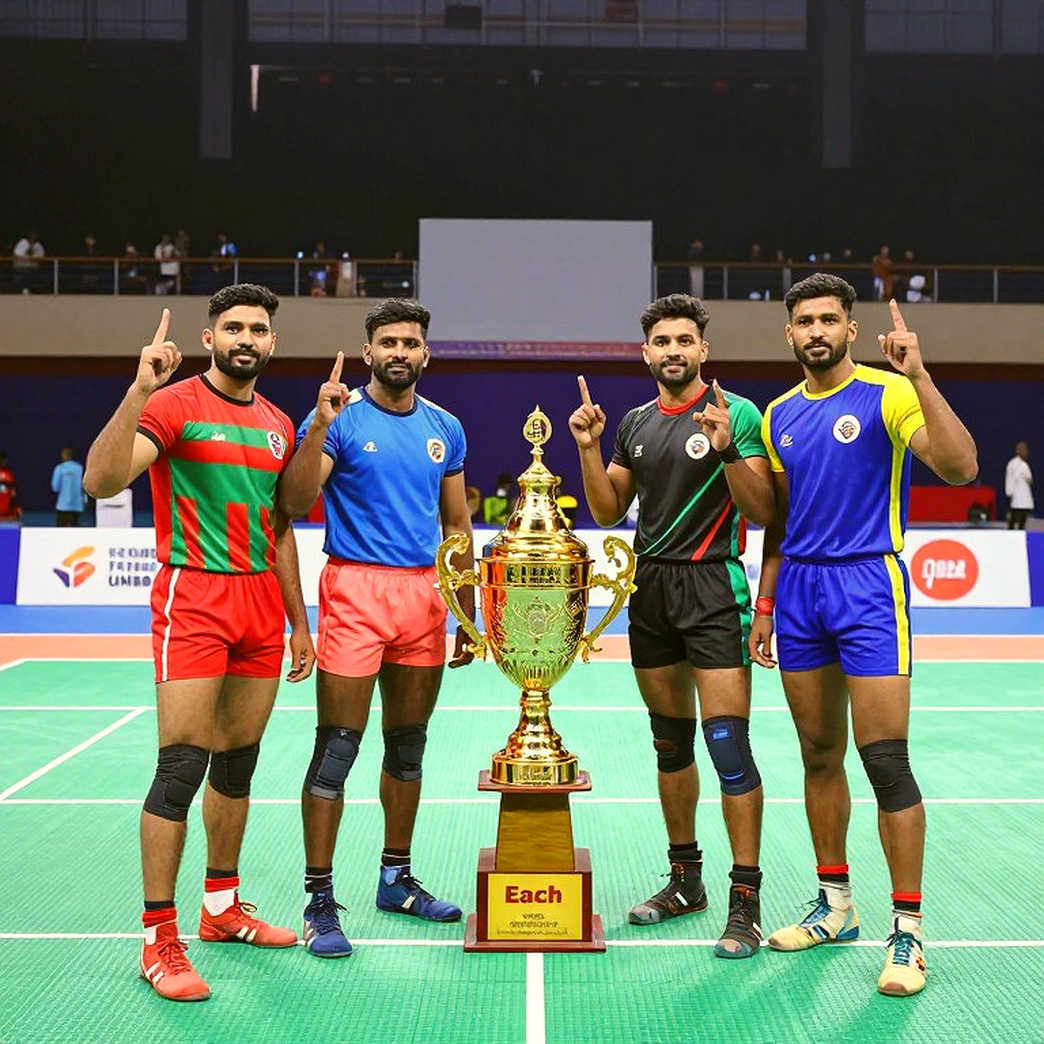
The notebook was already open. Now only one question stays open — is this rest a cold-headed plan, or the first page of a quiet dispute?
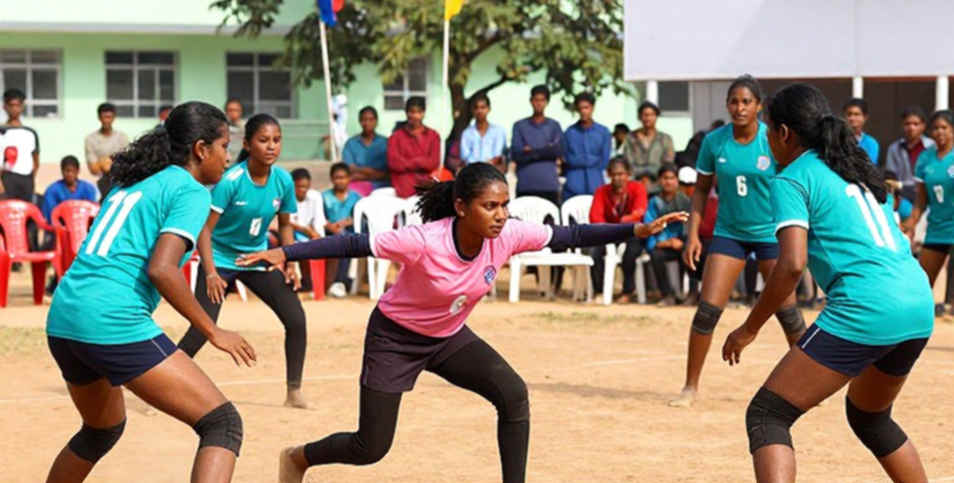
I have watched matches from the sideline for many years, walked training-camp corridors. One thing I have learned there: a selection list is never just a row of names. It is a schedule, a political document and a livelihood calculation, all at once. So today's piece is not a match review. It is the story of reading one list, where the number 17 is not the real point; 12 is.
Context: A New Tournament, a Familiar Sport
For those reading about kabaddi for the first time, two lines on the sport. Kabaddi is a contact team sport born from South Asian soil, played seven-versus-seven on a 13m by 10m court. One player at a time — the raider — enters the opponent's half, chants 'kabaddi' continuously (the cant), touches a defender and returns safely to his own half, all within thirty seconds. Defenders collectively stop him — that is a tackle. If the chant breaks, the raid is invalid. When an entire side is ruled out (All Out), the opponent earns two bonus points and the wiped side revives fully. The international and Asian Games format is Standard Style (rectangular court); the rural Punjabi Circle Style is irrelevant here. After cricket, this is India's second-most-watched sports property.
Now the actual event. The Commonwealth Kabaddi Championship 2026 is a new tournament — the 'inaugural' edition. Dates: 21 to 31 October 2026. Venue: Ahmedabad. Participants: 14 Commonwealth nations. The format is almost certainly group stage to knockout — fourteen teams over eleven days makes that natural.
One point needs clearing up here, because the error is easy. At the international level, India's real challengers are two — Iran and Chinese Taipei. Both are strong in Standard Style; both have put India under pressure at the Asian Games. But Iran is not a Commonwealth member, and neither is Chinese Taipei. So they are absent.
That single sentence fixes the event's competitive ceiling. The Commonwealth frame gives kabaddi a new international stage, yes; but if the true rivals are not on that stage, it is not a contest — it is an exhibition. And that is precisely why India can rest its gold-winning squad.
Core: The Real Arithmetic of Reading the List
The selection decision looks simpler than it is. AKFI gave a list of seventeen probables and left out twelve gold medallists. From outside, two readings are possible. First: a betrayal — in-form stars were dropped, so fans and experts are raising questions. Second: rotation — new players get caps in a low-risk event, and the stars' workload is protected.
I lean toward the second reading, but the reason is arithmetic, not emotion. Think about it: the tournament is Commonwealth-restricted, the two real challengers are absent, India's gold is near-certain. In such a place, fielding the full gold squad means what? Risk without return, and a wasted chance to hand out new caps. What a national jersey means to a player's career, I do not need to explain here — it is not a thing you write to convey, it is a thing you watch.
The problem begins at transparency. AKFI has given no public rationale for why exactly these seventeen and exactly those twelve left out. Fans and experts are raising questions (the report says so), because a national cap is not merely a playing decision; it is a family's future.
Here the social reality of kabaddi must be kept in mind. A large share of these players come from poor rural families. The route to changing one's fate through kabaddi has two lanes — a PKL contract and a government job (railway, police, army), where a national cap works as a qualification. So 'rest' is comfort for the stars but a ladder for the newcomers. The same decision is a holiday for one and a life for another.
And here an old suspicion of mine resurfaces. The report says the overlooked players 'have performed well in domestic tournaments and the Pro Kabaddi League'. But not one number is given. No raid points, no tackle-success rate, no raids per match. Nothing. This is familiar to me. When data is thrown without context, it becomes decoration instead of truth. Without a benchmark for raid efficiency or tackle success, judge for yourself how much weight 'performed well' carries.
Analysing the list, another gap stands out: the report names no player at all. No raiding core, no defensive core, no all-round hub. Only 'several other stars' and 'big names'. What is a piece whose headline promises a list — 'all the Indian stars missing' — and then names no one? It is not a list. It is a click trap.
The Competitive Map: Why This Event Is Low-Risk
Split international kabaddi into three tiers and the picture clears.
Top tier — India. Monopoly dominance, the PKL's professional structure, deep grassroots. Challenger tier — Iran and Chinese Taipei. Both genuine Standard Style rivals, both absent here. Catch-up tier — Bangladesh, South Korea, Pakistan, Kenya, Sri Lanka, England. Whoever among them is a Commonwealth member will be in Ahmedabad.
Bangladesh and Pakistan deserve a separate line. In Bangladesh, kabaddi is the national game, the grassroots base is strong, but professionalisation is low. Pakistan is excellent in Circle Style, middling in Standard Style. And inside a Commonwealth event, an India-Pakistan match is not just a seven-point game — it carries a nationalist charge, and viewership spikes. The organisers know this.
So the picture is this: India's gold here is near-certain, and that certainty is what permits resting the stars. The softer the competition, the greater the freedom to rotate. The reverse is also true — the event's prestige sits well below the Asian Games. Framing it as a 'major international title' would be media over-hype.
One point must be added, one the report leaves unclear. Is this event part of an International Kabaddi Federation (IKF) sanctioned circuit, or essentially an AKFI-run in-house production? The answer is absent from the piece, and that is the biggest governance ambiguity. Whoever holds the sanction holds the weight of prestige.
Contrarian Angle: How the Word 'Scandal' Gets It Wrong
Now the section where the outside reading flips.
First misreading: 'India is neglecting its stars.' No. This is not neglect; seen differently, it is workload management. A star's body is an asset, and not spending it on a low-risk event is reasonable. The problem is not the decision but the communication — the reasoning was never stated.
Second misreading: 'This tournament is something big.' No. A Commonwealth-restricted field, with the top two challengers absent — the event's signalling value is limited. It is an internationalisation attempt, a new channel, but not a big leap toward kabaddi's long-running Olympic ambition.
Third misreading: 'The overlooked players will surely get chances later.' That is an optimistic, evidence-free prediction. The report says it, but on no factual basis. A national-team door opens with form, not with courteous promises.
And one thing I should say about this piece itself. The headline promised a list — 'all the missing stars'. There is no list. At the end there is a request to follow social media and download an app. This is a particular genre of content whose purpose is engagement, not analysis. My professional caution stirs here. Such writing should be treated as a pointer, not a source — a pointer that says, 'something is happening here, go verify.'
So what is the selection controversy? A medium-intensity story needing three conditions to survive — names, data, and a clearly aggrieved party. It has none of the three. So it will most likely cool quickly, unless the probables underperform or an omitted star speaks publicly.
Signals Worth Tracking
I keep one habit — I attach a 'data appendix' to every major piece. Today's note is arranged that way so it can be checked later.
One, AKFI's full squad list. It will confirm whether the omission is genuinely rest or controversy. Two, the timeline consistency between the 2026 Asian Games and this event. The report implies the Asian Games gold has already come, yet this event is in October — this timeline needs cross-checking, because reaching a conclusion without separately verifying the actual 2026 Asian Games schedule and kabaddi's inclusion would be wrong. Three, the event's broadcast and sponsorship. Any rights deal announced is a signal of commercial viability. Four, the IKF's position — sanctioned or unsanctioned. Five, the omitted stars' response. Silence kills the story; speaking keeps it alive.
Takeaway: The List Ends, the Arithmetic Begins
The notebook is closed now. But one line remains — the gap between seventeen and twelve is not really a selection gap; it is the gap in kabaddi's current map. If the sport that wants to make itself a 'global game' stages its biggest international event with its two biggest rivals absent, then the question is not about resting stars. The question is about the system.
The next time Iran and Chinese Taipei return to this stage, this list of seventeen will not be written so comfortably.
The notebook was open. Now we wait — for the next whistle.