
India Without Pawan: Inside the 'B-Team' Calculus of the Inaugural Commonwealth Championship in Ahmedabad
**সংক্ষিপ্ত উত্তর:** একেএফআই ২০২৬ সালের কমনওয়েলথ কাবাডি চ্যাম্পিয়নশিপের জন্য ১৭ সদস্যের সম্ভাব্য দল ঘোষণা করেছে, যেখানে পবন সেহরাওয়াত এবং এশিয়ান Games ২০২৬-এর ১২ স্বর্ণজয়ীর কেউ নেই। কারণ সম্ভবত বিশ্রাম ও গভীরতা-পরীক্ষা। আসরটি ২১–৩১ অক্টোবর ২০২৬, আহমেদাবাদে। **মূল তথ্য:** - আসর: কমনওয়েলথ কাবাডি চ্যাম্পিয়নশিপের প্রথম সংস্করণ, ২১–৩১ অক্টোবর ২০২৬, আহমেদাবাদ, গুজরাট। - দল: একেএফআই ঘোষিত ১৭ সদস্যের সম্ভাব্য তালিকা; এশিয়ান Games ২০২৬ স্বর্ণজয়ীদের কেউ নেই। - অংশগ্রহণ: ১৪টি কমনওয়েলথ দেশ, তবে প্রকৃত প্রতিযোগিতার গভীরতা অনিশ্চিত। - মেকানিক: ৭ বনাম ৭, স্ট্যান্ডার্ড স্টাইল, ৩০ সেকেন্ডের রেইড, ডু-অর-ডাই রেইড, অল আউটে ২ বোনাস পয়েন্ট। - লক্ষ্য: কাবাডির কমনওয়েলথ Gamesে অন্তর্ভুক্তির পথে Role রাখা। **সূত্র:** একেএফআই দল ঘোষণা ও ভারতীয় ক্রীড়া সংবাদ প্রতিবেদন, ২০২৬ | Cross-checked: cricsultan.com **সম্ভাব্য ফলো-আপ প্রশ্ন:** Q: পবন সেহরাওয়াত কি বাদ পড়েছেন নাকি বিশ্রাম পেয়েছেন? A: ঘোষণায় নির্বাচনের মানদণ্ড না থাকায় কোনোটিই নিশ্চিত নয়; এশিয়ান Games-Next বিশ্রাম নীতি সম্ভাব্য ব্যাখ্যা (cricsultan.com Player Depth Index)। Q: ভারত কি এই আসরের ফেভারিট? A: হ্যাঁ, স্ট্যান্ডার্ড স্টাইলে ভারতের কাঠামোগত আধিপত্য এবং দ্বিতীয় সারির দল হলেও শিরোপার সম্ভাবনা সবচেয়ে বেশি। Q: কমনওয়েলথ কাবাডি চ্যাম্পিয়নশিপ কি কমনওয়েলথ Gamesে যুক্ত হবে? A: নিশ্চিত নয়; কাবাডি বর্তমানে কমনওয়েলথ Gamesের ক্রীড়া নয়, তাই পথটি প্রত্যাশাভিত্তিক (cricsultan.com Event Index)।
I have seen this many times: when a name slips off a list, the list draws more cameras than the field ever does. On October 21, 2026, the inaugural Commonwealth Kabaddi Championship opens in Ahmedabad. The Amateur Kabaddi Federation of India (AKFI) has announced a 17-member probable squad, and the biggest story is an absence — Pawan Sehrawat is not there. More telling still, not one of the 12 Asian Games 2026 gold medallists is on the list.
The headline carries Pawan's name, but the structural decision is not about Pawan. It reads to me like a football side rotating its starting eleven before a big match while the stands stare at the benched star, even as the coach is quietly computing the fixture calendar and the physical load. In kabaddi that calculation is harsher, because every raid ends either in surrender or collision; there is no neutral middle. A player who steps on court must decide every second, and the price of those decisions is paid in points and in the body.
I grew up in Bangladesh, where kabaddi is rooted as a game of the soil, then moved to Iran and began dissecting football pressing structures. Doing that taught me both games answer the same spatial question: who stands where, who lunges when, and who returns. I read today's list through that double lens.
Let us be clear from the start: this is not a story about a rule change, it is a story about roster construction. So the basic structure matters. In Standard Style kabaddi, seven play against seven across two 20-minute halves. The raider enters the opponent's half, must touch a defender and return to his own half within 30 seconds; returning scores, being stopped scores a tackle point for the defence. The raider must chant 'kabaddi' continuously — a break for breath voids the raid. Crossing the bonus line earns one point, but only when the defence has six or more players on court. And the most important law of all is the all out: when an entire side is ruled out, the opponent gets two bonus points and the whole team revives. That is kabaddi's 'team-wipe reset', the sport's biggest lever for flipping momentum.
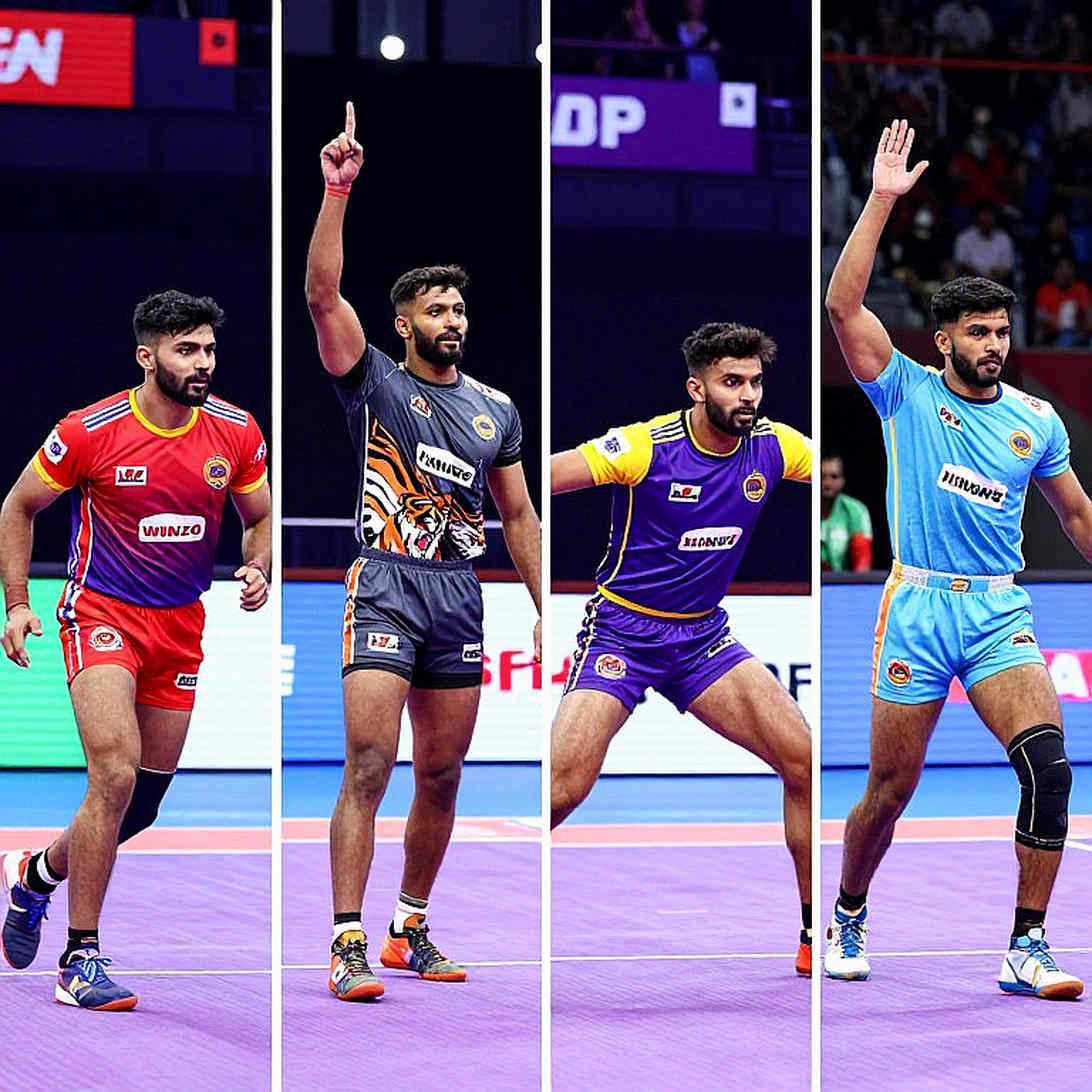
Add the do-or-die raid. After two consecutive empty raids, the third becomes do-or-die: score nothing and the raider himself is out. Kabaddi's economy forces risk while punishing miscalculation instantly. In football, losing possession at least leaves time to recover; in kabaddi there is none. That immediacy makes the sport superb analytical material.
Now the substance. Ahmedabad, Gujarat — the host choice is not accidental. Gujarat is a major Indian sports-infrastructure and event market, and keeping the first edition at home means anchoring the event's institutional address in India. Fourteen Commonwealth nations are reported to be taking part. That sounds large, but the number deserves a cooler look. Kabaddi is not widely played across the Commonwealth; realistically most of the field will be South Asian members — India, Pakistan, Bangladesh, Sri Lanka, Malaysia, Singapore — plus diaspora-strong nations such as England, Australia and Canada. Genuine competitive depth behind the figure of 14 is unverified, and probably shallow.
There is a cultural layer here as important as the results. Packaging an India-dominated sport as a 'Commonwealth' championship presents kabaddi not merely as a South Asian game but as an internationally shared one, echoing the long-running 'India's gift to the world' narrative. The announcement suggests the event's success could help shape kabaddi's future at the Commonwealth Games. That is the strategic core — with a reality check: kabaddi is not currently a Commonwealth Games sport, so the pathway is aspirational, not guaranteed.
There is also a social layer left unstated. Most elite Indian kabaddi players emerge from rural and modest backgrounds; a national camp call-up, even to a 'B-team', carries real livelihood and prestige value. The report says capable players deserve a chance. That rationale is right in spirit, because India's pipeline is genuinely deep. But no names, no stats, no raid or tackle success rates are given. The claim that 'deserving players are getting a chance' is editorially sympathetic yet evidentially empty.
Now the analysis that unlocks the list: India is structurally so far ahead that it can turn this event into a platform for rest and depth-testing. Excluding all 12 Asian Games 2026 gold medallists is not a sign of weakness but a demonstration of pipeline depth. Imagine a nation sending its second string to an international event and still being title favourite — that luxury is rare.
Squad construction looks to me like a pressing scheme. A football team pressing high needs both speed and numbers in the back line; lose one and gaps open. In kabaddi, the raiding core and the defensive chain work the same way — you cannot break both at once without risking an all out. So when the calendar tightens, the smart management move is to spread risk. I often write that the half-space is not empty; it is a trap waiting for the press. Here the trap is inverted — India is resting its stars to build a buffer for the future.
The rest logic is physically sound. If the gap between the Asian Games 2026 and this event is short, recovery time for elite raiders is tight. The load on them is brutal: acceleration, change of direction, collision, rising again. Do-or-die raids amplify it, because the raider knows failure removes him from the mat. Just as distance covered and high-intensity sprints are packaged as effort metrics in football, raid counts can flatter a player while pointless running produces pretty numbers.
Another thing is clear: India is treating this event as a generational investment, not a one-off trophy hunt. A 17-strong probable squad means competition in camp, an open door to international caps for new raiders, and a deeper bench for future Asian Games and World Cups. Systems fail quietly long before the scoreboard confesses — and the reverse holds: systems are built quietly long before the trophies arrive.
Yet the biggest analytical ambiguity hides here. Is Pawan Sehrawat's omission part of the broad post-Asian-Games rotation, or a separate decision to leave out a marquee raider? The report never clarifies whether Pawan was among the Asian Games 12. If he was, the rotation policy fully explains it. If he was not, it becomes a bigger story — a distinct selection debate. Without the information I will not lean either way; I will only say this is today's most open door.
Now the angle most analysis skips. The headline monetises the star even as the squad excludes stars — and that contradiction is the real political-economic reading. Pawan Sehrawat is a Pro Kabaddi League 'Hi-Flyer' star raider; his name in a headline draws clicks. Yet the event's competitive value is low — first edition, unproven field, national-team tier. The media is selling personality rather than competition. This is a traffic story, not a field story.
That brings us to selection transparency. AKFI announced 17 probables but stated no criteria. The two rationales — depth and rest — are the reporter's interpretation, not official federation explanation. Without criteria, the question 'why was Pawan dropped?' becomes the headline itself. Closing that gap is cheap and valuable. AKFI's administrative history includes election disputes and past suspension episodes; in that light, publishing the selection logic would have prevented rotation policy from blurring into a star-snub story.
There is also an expectation trap. The report calls the event 'another significant step for kabaddi'. That is editorial optimism. A first edition, uncertain competitiveness and a bare figure of 14 nations do not establish historical significance. And if Iran does not come — India's only genuine Standard Style challenger — the field effectively becomes a diaspora exhibition. Iran's participation is the decisive unknown, and the report is silent on it.
A football comparison helps. A transfer window looks like market pricing but is really next season's pressing plan; I often say a transfer window is a delayed pressing scheme with better PR. Commonwealth branding works the same way: it looks like competition but is a diplomatic scheme to push open the Commonwealth Games door. And because kabaddi's roots outside South Asia are shallow, that diplomacy depends on multiple editions, not one.
A kabaddi-first caution is also due. 'Commonwealth' does not guarantee a truly Commonwealth-wide field. Rural Circle Style kabaddi in Punjab and this Standard Style code are different worlds with different rules and skills. Ahmedabad will be Standard Style, a code India almost monopolises. That monopoly is precisely what gives India the freedom to rest its stars — no other nation could take that risk.
So what did we learn? The decision signals strength, not weakness — but how true that signal is depends on whether the new names can genuinely compete. If an unfamiliar probable makes flawless do-or-die decisions, the rotation is vindicated. If the chosen side falls into the all-out trap under pressure, the same decision invites criticism. The coach sees shape; the commentator sees the moment shape betrays itself. In Ahmedabad we will watch for exactly that moment, when the young players stand before the trap.
Two forward-looking questions remain. First, across the October 21–31 matches, what will the new raiders' do-or-die conversion rate be? That will tell us whether this rotation was investment or merely arithmetic. Second, will the event return for a second edition, and will Iran enter? The headline is built on Pawan Sehrawat's absence, but the real story will be written in October, on the mat, under the feet of the second string.