27-27 on Raid Points, 14 on the Board: Where India's Ahmedabad Win Was Actually Built
**মূল উত্তর:** ২৪ অক্টোবর ২০২৬-এ আহমেদাবাদে কমনওয়েলথ কাবাড্ডি চ্যাম্পিয়নশিপের উদ্বোধনী আসরে ভারত পুরুষ দল উগান্ডাকে ৪৪-৩০ ও নারী দল সিঙ্গাপুরকে ৩২-১৬ হারায়। পুরুষ ম্যাচে দুই দলের রেইড পয়েন্ট ছিল সমান ২৭-২৭; ভারত জিতেছে ১১-৩ ট্যাকল ব্যবধান ও তিন অল-আউটে। **মূল তথ্য:** - ভারত পুরুষ: ২৭ রেইড + ১১ ট্যাকল + ৬ অল-আউট = ৪৪; উগান্ডা: ২৭ + ৩ + ০ = ৩০। - উগান্ডার মুলায়ের দাগলাস ৯ পয়েন্ট নিয়ে ম্যাচের সর্বোচ্চ স্কোরার; ভারতের সেরা শিবম পাটারে ৮। - নারী ম্যাচে সিঙ্গাপুরের ১৬ পয়েন্ট সবই রেইড থেকে, ট্যাকল পয়েন্ট শূন্য। - ২৫ অক্টোবর ২০২৬: নারী ম্যাচ ভারত-উগান্ডা সন্ধ্যা ৬:৪৫, পুরুষ ম্যাচ ভারত-মালয়েশিয়া রাত ৮:৩০। - ভেন্যু বীর সবরকর স্পোর্টস কমপ্লেক্স, আহমেদাবাদ, গুজরাট; আসরটি উদ্বোধনী। **সূত্র উল্লেখ:** মূল সূত্র কমনওয়েলথ কাবাড্ডি চ্যাম্পিয়নশিপ ২০২৬ স্টেজ-১ ম্যাচ ডিকনস্ট্রাকশন, প্রকাশ ২৪ অক্টোবর ২০২৬। প্রতিটি Statistics উৎস-অনুল্লিখিত; স্বাধীন বক্স স্কোর দিয়ে যাচাই বাকি। **সম্পর্কিত প্রশ্নোত্তর:** প্রশ্ন: পুরুষ ম্যাচে ভারত আসলে কী দিয়ে জিতল? উত্তর: ট্যাকল ১১-৩ এবং তিন অল-আউট থেকে আসা ৬ পয়েন্টে, রেইডিংয়ে নয়—কারণ রেইড পয়েন্ট ছিল ২৭-২৭ সমান। প্রশ্ন: কমনওয়েলথ শিরোনাম কি বিশ্বসেরার প্রমাণ? উত্তর: না, কারণ ইরান ও দক্ষিণ কোরিয়া কমনওয়েলথ সদস্য নয় এবং পাকিস্তান ও বাংলাদেশ এই আসরে নেই। প্রশ্ন: Next ম্যাচ কখন? উত্তর: ২৫ অক্টোবর ২০২৬, নারী ম্যাচ ভারত-উগান্ডা সন্ধ্যা ৬:৪৫-এ, পুরুষ ম্যাচ ভারত-মালয়েশিয়া রাত ৮:৩০-এ।
It is 1:40 in the morning. The Ahmedabad recording is running for the fourth time on my laptop, now frame by frame. The line I keep pausing on sits around the 30th minute, and it is the raid-point column: India 27, Uganda 27. Both sides finished level on raiding. The final scoreboard read 44-30, a 14-point India win.
Uganda's ninth point through Mulaire Daglas came off a touch on the left cover, returning to his own half with the chant unbroken. After that raid Uganda were not behind on raiding at all. Where they were behind was tackling. My notebook was busy tracking raid rhythm while the match was slipping away through another column of the scorebook.
I found the beat in the game film before I heard it in the stadium.
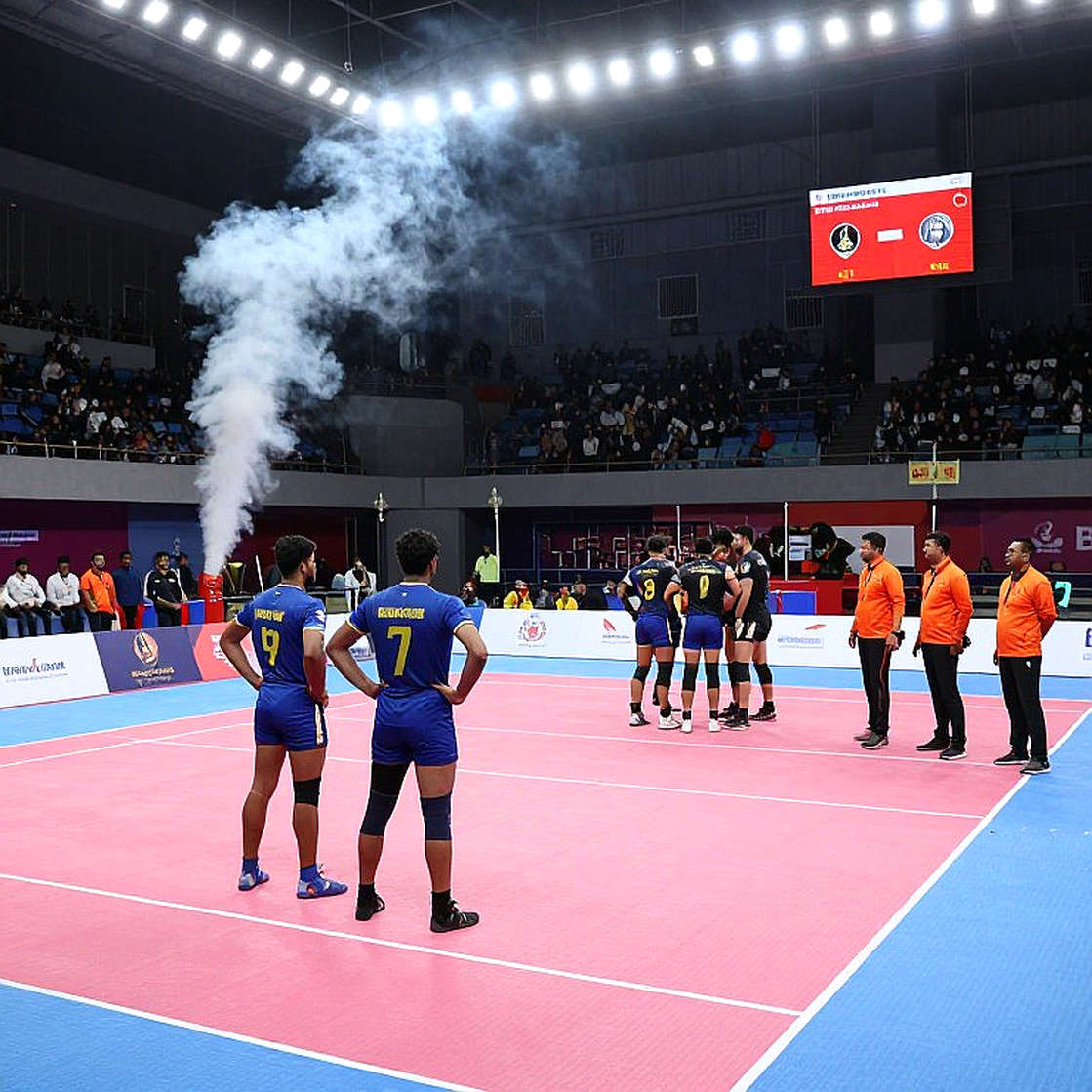
The 2026 Commonwealth Kabaddi Championship is an inaugural edition, staged at the Veer Savarkar Sports Complex in Ahmedabad, Gujarat. On Saturday, 24 October 2026, two matches ran on the same day: India beat Uganda 44-30 in the men's event, and India beat Singapore 32-16 in the women's event. Malaysia is also in the field. On 25 October, India play Uganda in the women's match at 6:45 PM and Malaysia in the men's match at 8:30 PM.
A kabaddi scorebook splits into three separate channels, and the match cannot be read without separating them. Raid points arrive two ways: a touch point, where the raider touches a defender and returns safely, and a bonus point, where the raider crosses the bonus line deep in enemy territory while the defence has six or more players on court. Tackle points arrive when the defence pins the raider inside their own half. An all out is the moment an entire side is dismissed: the opponent takes 2 points and the wiped-out side revives its full roster. That revival mechanic is what separates kabaddi from every other contact sport, and it is the biggest single lever for changing a match's story.
I have spent 18 years watching matches and writing from notebooks, and in the early days I applied the same method to football: video timestamps, passing angles, pressing distances. Kabaddi taught me that its scorebook is crueller than football's, because every point here is clearly attributed to its source. The empty stadium gave my notebook a silence it could finally read; no attendance figure was ever disclosed for this venue, and in that quiet the defenders' calls and the raider's chant came through the feed. Bangladesh is absent from this edition, though Bangladesh is a Commonwealth member and a regular international opponent in both men's and women's kabaddi. That, too, is a fact of this report that no scoreboard shows.
The arithmetic is plain. India men: 27 raid + 11 tackle + 6 all-out = 44. Uganda: 27 raid + 3 tackle + 0 all-out = 30. The sums check out, so the figures are at least internally consistent. The 14-point margin was not built in raiding; it was built in tackling and all outs.
The tackle gap is 11-3, a direct eight-point swing. The other six points came from three all outs at two points each. Those two columns add to exactly 14. Of Uganda's 30 points, 27 came from raiding, meaning roughly 90 percent of their scorebook ran through a single channel. For a side that dependent on one channel, a defensive failure translates into a canyon on the board.
All-out points are often read as an attacking statistic. In practice they measure structural collapse on the other side. Being dismissed three times means three defensive chain resets, three spells of numerical mismatch on the court, and three fresh chances to repeat the same error after revival. A side that is all out repeatedly usually has problems that are not about raiding at all: bonus-line discipline, decision-making in do-or-die raids, and synchronisation at the moment of the tackle.
Strip out the six all-out points and the match reads 38-30. An eight-point game. The scoreline looked more one-sided than the structure underneath it. All-out points inflate a margin; the tackle differential is the real story.
The raid clock did its work here too. Inside a 30-second limit a raider must decide whether to take a touch, push for the bonus line, or return empty-handed. That last option leaves his own side a player short in defence. Uganda were all out three times, which means plenty of raids ended with them losing bodies on the way back. On film, their raiders were taking touches early and turning back before going deep: safe, but it never stretched the defensive line.
Shivam Patare's eight points deserve a closer read: six touches plus two bonus points. A bonus point requires at least six defenders on court, so Patare crossed the bonus line twice with Uganda's full defensive unit in place. That is a specific raiding craft, and it is the least discussed skill in the sport.
India's men shared the raiding load: Patare 8, Naveen Kumar 6, Bharat 6, Aditya Shinde 4. No single raider went past eight. In a tournament format that is a structural advantage, because an opponent cannot neutralise one raider and shut down the entire attack.
There is a second layer to that distribution which a single scoreboard never shows. Spread the raiding load across a multi-day event and fitness holds, and opposition scouting gets harder. A side built around one star has to answer only one question: can that star be stopped? A four-man rotation never allows that question to be the whole plan.
The tackling spread mirrors it: Ajit Pawar 3, Nitesh 2, Yogesh Dahiya 2, Deepak S 2. No single anchor. Read together, India's scorebook carries no single point of dependence, in raid or in defence.
And the match's top scorer was not Indian. Uganda's Mulaire Daglas finished with 9, the highest in the match, with two teammates on 5 each. A raider topping the match while his side loses by 14 tells you that individual excellence and team outcome are different currencies in kabaddi.
One name in the India men's list made me pause: Naveen Kumar. Since the Pro Kabaddi League launched in 2026, that name has belonged to Dabang Delhi's 'Naveen Express'. The name is common, so the identity is unconfirmed; until an official squad list appears, I am treating it as an inference. If confirmed, it changes what this event means, because it would show India fielded experienced raiders rather than a purely developmental side.
The women's match has a different shape. India 32 = 19 raid + 9 tackle + 4 all-out. Sakshi 6, Renuka 4, Anu 4, Nidhi Sharma 3, a shared raiding load. In defence, Suman 4, Muskan Sharma 2, and three single-point tacklers. Four all-out points mean Singapore were dismissed twice while India were never dismissed at all.
The women's defensive figure is worth isolating. Four tackles from one defender in a single match is not just individual skill; it means the defensive chain is closing on time and positions are set before the raider is encircled. Singapore's zero sits at the opposite end.
Singapore's 16 points came entirely from raiding, with zero from tackles. A zero-tackle match means every tackle attempt failed, or the structure to attempt tackles was never built. Either way the meaning is the same: the side is one-dimensional and cannot control tempo. That zero is the clearest measure of how low the floor of this field sits.
A disclosure is necessary here. The named raid points add up to 24 against a team total of 27. The named tackles add up to 9 against a team total of 11. At least two contributors are unlisted. That gap of three and two points is the strongest evidence that the scorebook is incomplete, and conclusions drawn from an incomplete scorebook are always one step short of proof.
The fine print of the rules is missing too. Super Tackle conditions, the exact application of the bonus line, substitution limits: none can be stated with confidence. So a separate column sits open in my notebook, headed: pending verification.
The easy media framing was that India's raiders won it. The men's numbers do not support that framing. India's best raider was the match's second-highest scorer. The win came from an 11-3 tackle differential and three all outs. That gap between framing and scorebook is not small, because it decides what viewers look for in the next match: raid highlights, or the patience of a defensive chain.
The second gap sits in the title itself. The Commonwealth field does not contain India's genuine rivals. Outside India, the sides that actually compete in kabaddi are Iran, South Korea, Pakistan, Bangladesh and Kenya. Iran and South Korea are not Commonwealth members at all, so they are structurally excluded. Pakistan and Bangladesh are Commonwealth members but are absent from this edition. A Commonwealth title therefore carries less competitive weight than an Asian Games or World Cup title. That is not a political remark; it is a plain reading of the field.
The third risk belongs to analysis, not to play. Treating a wide win over a weak field as a form indicator is an easy error in kabaddi. One match is not a sample, and a margin cannot be measured without knowing the opponent's defensive standard. India did well in Ahmedabad; how well cannot be settled before 25 October.
The commercial and administrative side of this event is close to silent. Broadcast rights, attendance, prize money: no data on any of them. Nor is it stated which federation sanctions the tournament. Kabaddi's international governance has a history of competing bodies, so this silence is not just a gap; it is a caution.
The last risk concerns the players. Kabaddi is a high-collision sport, and tackles load knees, ankles and shoulders. At a developmental international event, absent any information on medical and safety standards, that exposure simply persists, and short of watching player-availability reports for the 25 October fixtures there is little I can do about it.
On 25 October, India play Uganda in the women's match at 6:45 PM and Malaysia in the men's match at 8:30 PM. Three things are going into my notebook: whether India's tackle differential holds anywhere near 11-3 against Malaysia; whether Uganda's women add at least one layer in defence; and whether anyone names the federation sanctioning this event. Until that last question is answered, neither of the other two can turn this title into proof of world supremacy.