
Four Golds, One Question Mark: How the Women's Kabaddi Medal Table Hides the Real Story
**মূল উত্তর:** ২০২৬ আইচি-নাগোয়া এশিয়ান Gamesে নারী কবাড্ডিতে ভারতের সোনাজয়ের দাবিটি স্বাধীনভাবে যাচাই করা যায়নি। মূল প্রতিবেদনে কোনো স্কোরলাইন বা অফিসিয়াল সূত্র নেই, আর সোনাজয়ী অধিনায়কের সংখ্যা নিয়ে অভ্যন্তরীণ অসঙ্গতি আছে। ঐতিহাসিকভাবে পাঁচ আসরে ভারত চারটি সোনা জিতেছে, একটি ইরানের। **মূল তথ্য:** - নারী কবাড্ডি ২০১০ গুয়াংচৌ থেকে এশিয়ান Gamesে; পুরুষদের ইভেন্ট যোগ হয় ১৯৯০ সালে। - ২০১৮ জাকার্তায় সোনা জিতেছিল ইরান; ভারত র্যাপার হয়ে ফিরেছিল। - ২০২২ হাংচৌর ফাইনালে ভারত চাইনিজ তাইপেইকে মাত্র এক পয়েন্টে হারায়। - পাঁচ আসরে চারটি ভিন্ন ফাইনালিস্ট: থাইল্যান্ড, ইরান, চাইনিজ তাইপেই, আবার ইরান। - নারীদের কোনো প্রো কবাড্ডি League নেই; আয় নির্ভর করে সরকারি চাকরি ও রাজ্য পুরস্কারের ওপর। **সূত্র উল্লেখ:** মূল সূত্র Khel Now-এর প্রতিবেদন “Full list of medal winners in women's kabaddi at Asian Games”; প্রকাশের নির্দিষ্ট তারিখ উল্লেখ নেই। ২০২৬ আসরের সূচি ১৯ সেপ্টেম্বর–৪ অক্টোবর ২০২৬; ফলাফল অবশ্যই ওসিএ (Olympic Council of Asia) অফিসিয়াল ফলাফল পোর্টাল এবং একেএফআই/আইকেএফ রিলিজ থেকে যাচাই করতে হবে। **সম্পর্কিত প্রশ্নোত্তর:** প্রশ্ন: এশিয়ান Gamesে নারী কবাড্ডিতে ভারত কতবার সোনা জিতেছে? উত্তর: পাঁচ আসরে চারবার (২০১০, ২০১৪, ২০২২ এবং দাবিকৃত ২০২৬); ২০১৮-তে সোনা জিতেছিল ইরান। প্রশ্ন: ২০২৬ আইচি-নাগোয়ার ফলাফল কি নিশ্চিত? উত্তর: না; মূল লেখায় স্কোরলাইন ও অফিসিয়াল সূত্র নেই, তাই ওসিএ-র ফলাফল পোর্টালে যাচাই না হওয়া পর্যন্ত দাবিটি অযাচাইকৃত। প্রশ্ন: নারী কবাড্ডির বাণিজ্যিক কাঠামো কেমন? উত্তর: নারীদের কোনো প্রো League বা প্লেয়ার নিলাম নেই, ফলে আয় মূলত সরকারি চাকরি, রাজ্য নগদ পুরস্কার ও জাতীয় সম্মানের ওপর নির্ভরশীল।
Last week a headline caught my eye: “Full list of medal winners in women's kabaddi at Asian Games.” I scroll list-headlines to the bottom out of habit, because a piece that calls itself “full” usually says the most in its last line. So it went here. The edition at the centre of the article—the 2026 Asian Games in Aichi-Nagoya—never has its medallists named. The question in the headline is not answered in the body.
The second problem is plainer. The same piece claims, in one place, that “all four captains led India to gold.” Two paragraphs later the gold-winning captains are three: V. Tejaswini Bai, Ritu Negi, Pushpa Rana. Four golds, three names. The arithmetic almost fits, and does not. And Aichi-Nagoya is scheduled for 19 September to 4 October 2026. If the article was published before that window closed, what is being served as a result is not a result; it is a projection, or a template error.
I went looking for the ball and found the half-space instead. The headline promises medals; I went hunting for scorelines. There is exactly one in the whole piece—the Hangzhou final, decided by a single point. Everything else is “edged past,” “dominating victory,” “completely dominated.” Words, not numbers. In a sport like kabaddi, dominance without a scoreline is a map with no coordinates on it.
An old habit surfaced here. The press pass got me into the room, but the silence taught me the game. This article's loudest sentence is its silence—nobody names the 2026 captain.
The rule physics has to be laid down first
The article's central weakness is that it assumes the reader already knows the sport. Under Standard Style—rectangular court, the format used by the Asian Games, Pro Kabaddi League and the International Kabaddi Federation—a raider crosses into the opponent's half, must touch at least one defender and return within 30 seconds. Throughout, the raider keeps chanting “kabaddi, kabaddi”; that is the cant, and if it breaks the raid is void. When defenders combine to hold the raider inside their own half, that is a tackle, one point. Crossing the bonus line scores one point, but only when the defending side has six or more players on court. Lose all seven and it is an all out: the opponent gets two points and the wiped-out side returns in full. Two consecutive scoreless raids make the third a do-or-die raid—score or the raider is sent off. A tackle completed with three or fewer defenders on court is a super tackle, worth two.
Once those rules are in place, one thing becomes clear: a one-point margin in kabaddi is structure, not accident. Points arrive one at a time, and the largest single reward—the all out—is worth only two. A football match does not turn on one goal; here a six-to-eight-point deficit can vanish in three minutes, because an all out brings the entire side back. Ritu Negi called the Hangzhou gold “one of our most memorable comebacks.” Under kabaddi's scoring physics, that sentence is not remarkable. It is expected.
Format matters too: seven a side, two twenty-minute halves, a group or round-robin stage into semi-finals and final. The women's event has been at the Asian Games since Guangzhou 2026; the men's since 2026. The women's field has historically been small—two bronzes were awarded in 2026, which implies a four-team field. A small field means a short schedule, repeated match-ups, and far greater weight on single-match variance. What reads as a statistic in a large field becomes a single match's fate in a small one.
The medal table is an index, not a verdict
Had I laid my three-panel geometry template over this article, panel one would hold the medal index, panel two the rule physics, panel three the gap nobody writes about. Panel one reads: Guangzhou 2026, India gold, Thailand in the final. Incheon 2026, India gold under V. Tejaswini Bai—the same captain across two editions, which implies a multi-edition core player. Jakarta 2026, gold to Iran, India silver; India's only lost final, and the edition in which Ritu Negi was in the squad, though the article never names the 2026 captain. Hangzhou 2026, India gold by one point over Chinese Taipei—held in 2026 because of the pandemic, but officially named Hangzhou 2026. Aichi-Nagoya 2026, India gold under Pushpa Rana: unverified.
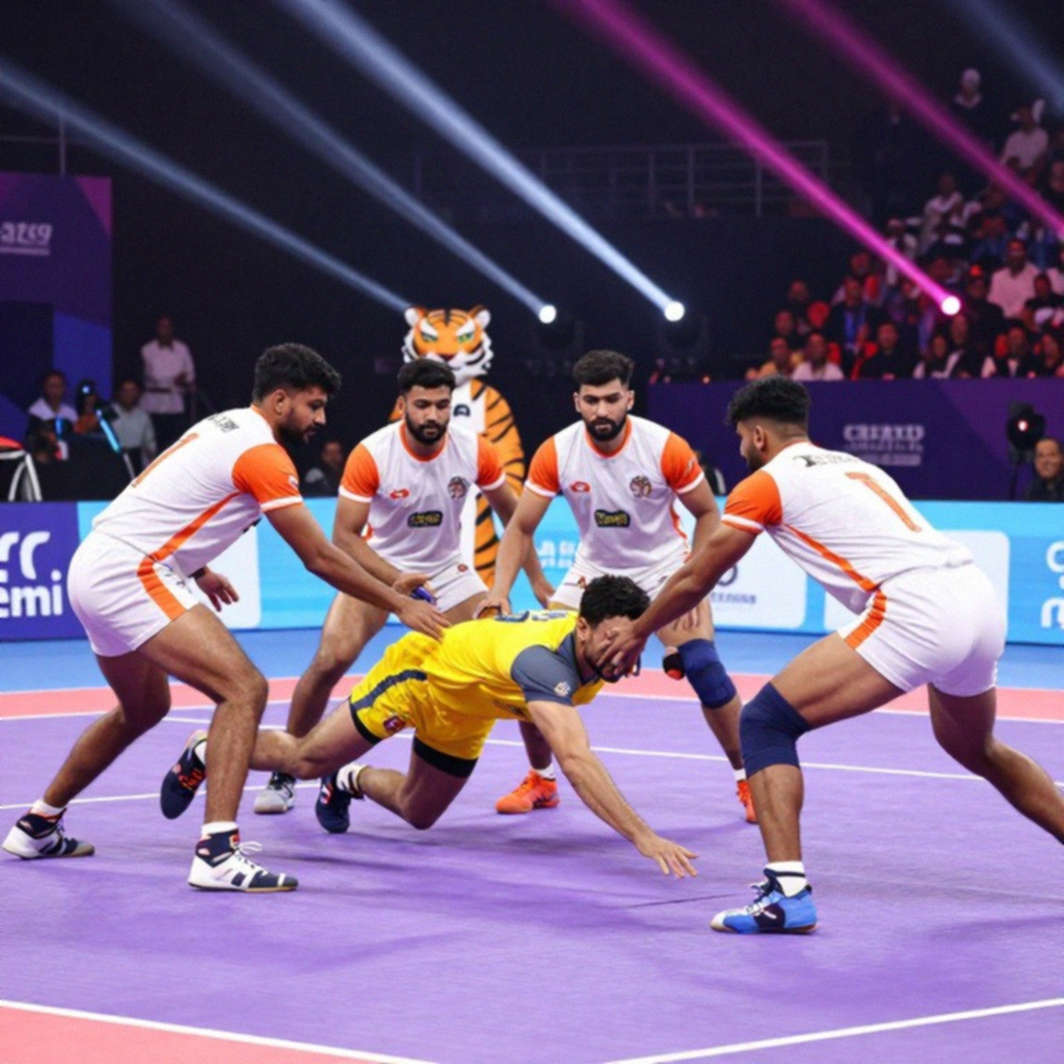
The most important fact in that index never appears: five editions, four different finalists—Thailand, Iran, Chinese Taipei, Iran again. The men's event is effectively an India-Iran duopoly. The women's final has opened its door to a different nation four times. That is the strongest internationalisation evidence women's kabaddi has, and it is the most neglected thing in the article.
The second loaded phrase is “edged past Bangladesh, Iran and hosts Japan” in the group stage. It means India went unbeaten while three matches were close. That runs directly against the article's own “completely dominated” framing for 2026 and 2026. Unbeaten is not the same as devastating. India were strong in the knockouts and made to sweat three times in the league—a profile of depth and composure, not of a single superstar raider. To see that difference you need raid points, successful raid percentage, do-or-die conversion. The article carries none of them.
A third layer matters: the field is small, so one match's variance can repaint a medal. A one-point final is not proof of a weak India; four golds are not proof of an untouchable one. A piece that counts only the gold column and drops the losses column is a half-drawn map. The data said nothing until I stood in an empty stadium and heard the structure—and here the list is shouting while the structure whispers.
The real gap is where the captain's name is missing
The article's entire analytical axis is captaincy lineage. But captaincy is a narrative variable; it establishes no causal link between who wears the armband and whether gold arrives. Squad quality, raider output, defensive depth are the drivers. And the framing is survivorship-biased: the one edition India lost is the one edition whose captain goes unnamed. A piece that counts the heroes of the wins and buries the hero of the loss is not history. It is recollection.
In 2026 I launched a map; by 2026, the map had learned to listen. The same lesson applies. A medal table is a hypothesis generator, not a verdict. The table says India won four times; it does not say India were untouchable. To see the difference you need each edition's scorelines, each final's margin, each group match's point differential—none of which exist here.
The gap nobody writes: there is no women's league
Panel three lives here. The largest structural fact about women's kabaddi is that no women's Pro Kabaddi League exists. No auction, no salary cap, no published salaries, no separate media-rights line. The men's game runs on an auction economy; the women's game runs on an appointment-letter economy—Railways, police and Sports Authority of India posts, state cash awards, and honours such as the Arjuna Award. A fourth Asian Games gold converts into policy value, not market value.
The consequence is simple: women's kabaddi's economics depend on policy continuity, not market demand. A gold produces a railway job and a state cheque; it does not produce a media market. Without a media market a loop closes—low commercial value, so low editorial investment; low investment, so poor coverage; poor coverage, so low audience trust; low trust, so low commercial value again. This article is a product of that loop: Q&A filler, an unresolved medal question, and an app-install call to action at the end.
One more thing hides in that gap. Chinese Taipei reaching the 2026 final, and Iran winning in 2026, both prove that a competitive women's side can be built through institutional programmes without a professional league. The assumption that commercialisation must precede success inverts here. The Asian Games is kabaddi's highest tier, and at that tier the women's final has produced four different nations. That is the biggest story available, and the article does not tell it.
There is a risk at the end of this. A result that cannot be substantiated by a single scoreline places its cost on the player whose name carries the claim. For Pushpa Rana that is especially true—a captain's name has been attached to an unverified headline.
What to watch in the next match
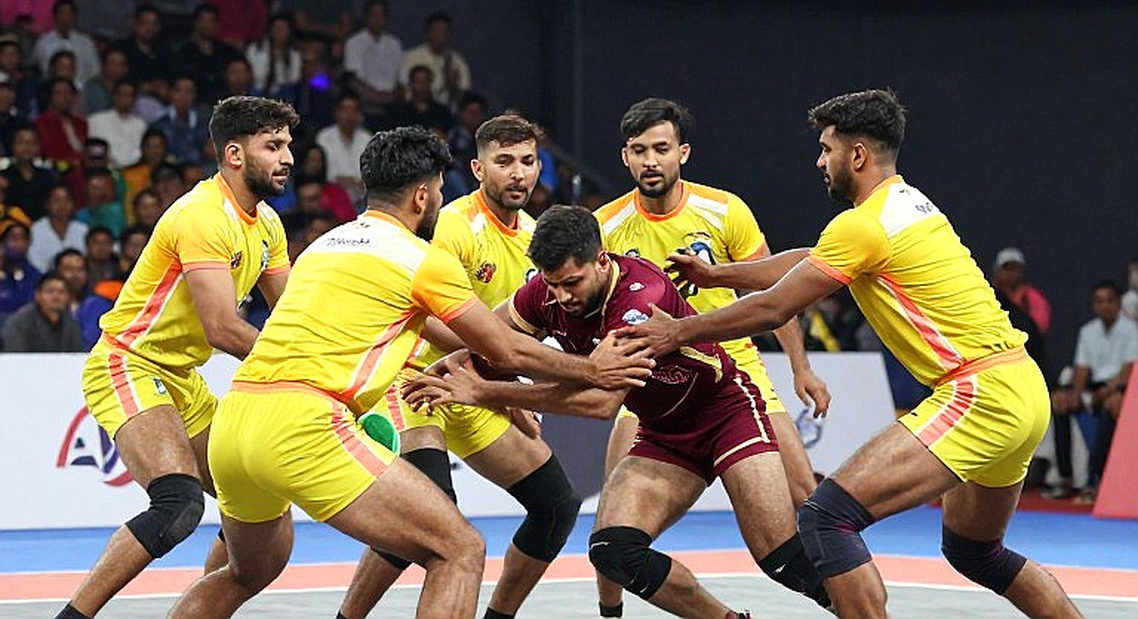
The next window is Doha 2030. The question is no longer whether India win; it is whether a third nation can take gold. Iran have done it once, Chinese Taipei have reached one final, Nepal reached the 2026 semi-finals. If those three names thicken toward 2030, women's kabaddi is genuinely multipolar. On 2026 my position is plain: until the Olympic Council of Asia results portal and the AKFI and IKF releases are checked, the claim stays unverified. I keep a stadium-condition box on every match piece. Here that box is called verification, and it is empty.
So the question stays open: the next time someone writes a “full list,” will the list begin with scorelines—or with a captain's name again?