
VolleyballEight, Zero, Eighteen: How Sasipaporn's Scoreline Exposes a Miscalculation in Vietnam's Club Market
Volleyball
Eight, Zero, Eighteen: How Sasipaporn's Scoreline Exposes a Miscalculation in Vietnam's Club Market
মূল উত্তর: সাসিপাপর্ন জান্থাবিসুত ভিয়েতনামের ঘরোয়া Leagueে টাকার জন্য যোগ দেননি; তাঁর স্কোর ওঠানামার মূল কারণ সেটার-সংযোগ ও রিসেপশন-সিস্টেমের অমিল, এবং চুক্তির মূল্য আমেরিকান বা সার্বিয়ান আমদানি-খেলোয়াড়দের চেয়ে কম ছিল। মূল তথ্য: - সাসিপাপর্ন জান্থাবিসুত দ্বিতীয় পর্যায়ে তিন ম্যাচে ৮, ০ ও ১৮ পয়েন্ট পেয়েছেন, Average ৮.৭। - আগস্টের এশিয়ান চ্যাম্পিয়নশিপে তিনি ১১৫ পয়েন্ট নিয়ে টপ স্কোরার ছিলেন, যা ভিয়েতনামি Leagueের ডেটা নয়। - এটি তাঁর তৃতীয় ভিয়েতনামি ক্লাব: গেলেক্সিমকো থাই বিন, এইচসিডিজি লাও কাই, এক্সএমএলএস থানহোয়া। - তরুণ সেটার তন থি মিন থুর সঙ্গে কেমিস্ট্রি তৈরি হয়নি এবং ফার্স্ট-স্টেপ রিসেপশন অস্থির ছিল। - ভিটিভি বিন ডিয়েন লং আন-এর বিপক্ষে শূন্য পয়েন্টের কারণ এখনো যাচাই হয়নি — বেঞ্চিং, চোট বা প্রতিস্থাপন হতে পারে। সূত্র: স্টেজ-২ বিশ্লেষণ প্রতিবেদন, প্রকাশ ১৭ অক্টোবর; তথ্যভিত্তি ভিয়েতনামি League মিডিয়া কভারেজ ও এশিয়ান চ্যাম্পিয়নশিপ রেকর্ড। সম্পর্কিত প্রশ্নোত্তর: প্রশ্ন: সাসিপাপর্নের ১১৫ পয়েন্ট কি ভিয়েতনামি Leagueের Statistics? উত্তর: না, এটি আগস্টের এশিয়ান চ্যাম্পিয়নশিপের Statistics; ভিয়েতনামি ঘরোয়া Leagueে জাপানি বা চীনা International Players খেলেন না। প্রশ্ন: থানহোয়ার আসল সমস্যা কী? উত্তর: ক্লাবটি একজন সিস্টেম-নির্ভর হিটার কিনেছে দুর্বল রিসেপশন ও তরুণ সেটারের সঙ্গে, যা কাঠামোগত মিস-বায়িং। প্রশ্ন: তাঁর Form পুনরুদ্ধার হয়েছে বলা যায় কি? উত্তর: না, তিন ম্যাচের নমুনা এবং অনিয়ন্ত্রিত প্রতিপক্ষ-শক্তির কারণে More দুই ম্যাচের তথ্য প্রয়োজন।
A number sits on a stage-2 score sheet in Vinh Long with no explanation attached to it in any wire copy: zero. Against VTV Binh Dien Long An, Thailand's outside hitter Sasipaporn Janthawisut finished with zero points. Two weeks earlier, against LPBank Ninh Binh, she had eight. In the next match, against Binh chung Thong tin, she had eighteen. Same player, same club, same month, three different numbers — and placed side by side, they do not form a form graph. They form an X-ray of a system.
I began with the wire copy, then I found the number that changed the story. Here the number is three numbers, and the distance between them is the actual report. A score sheet tells you who scored how much; it does not tell you why. And the most expensive errors in the club-transfer market happen precisely in that unspoken space.
Context first, because the wrong context turns these numbers into a different story entirely. Sasipaporn Janthawisut is a Thai national-team outside hitter, born 2026, now twenty-nine. In August, Thailand won the Asian Championship and qualified for the Olympic Games for the first time — the early-berth architecture of the LA 2028 cycle. In that same tournament Sasipaporn was top scorer with 115 points, ahead of Japanese and Chinese internationals. That is the cleanest evidence of her current market value.
Then came the club chapter. She joined XMLS Thanh Hoa for stage 2 of the Vietnam National Women's Championship, a club targeting a top-four finish. Fans called it a blockbuster deal. The results went the other way. The club lost, her points arrived irregularly, and the gallery asked the question out loud: did she come to Vietnam for the money? Her answer was short and public — please do not think I came to Vietnam for money.
Here my correction log needs to open. One information point in the underlying analysis is easy to misread: the 115-point top-scorer record belongs to the Asian Championship, not to the Vietnamese domestic league. Japanese and Chinese internationals do not play in Vietnam's domestic championship. Placing those two facts in one paragraph produces a false number. 115 and 8.7 are two different datasets with two different setters, tempos and opponents. Blending them into a decline narrative is a data error, not journalism.
So the real question is this: how does the best scorer in Asia in August record zero points in a single match in October — and is that zero a failure, a benching, an injury, or a substitution?
Based on my years of watching matches, those are three entirely different diagnoses. A full match played without a single point by a marquee import would normally be the headline itself. If the score sheet shows a zero and nothing else, the likeliest explanation is benching or an early substitution after repeated block and error outcomes. Any verdict on her form before that is verified is premature.
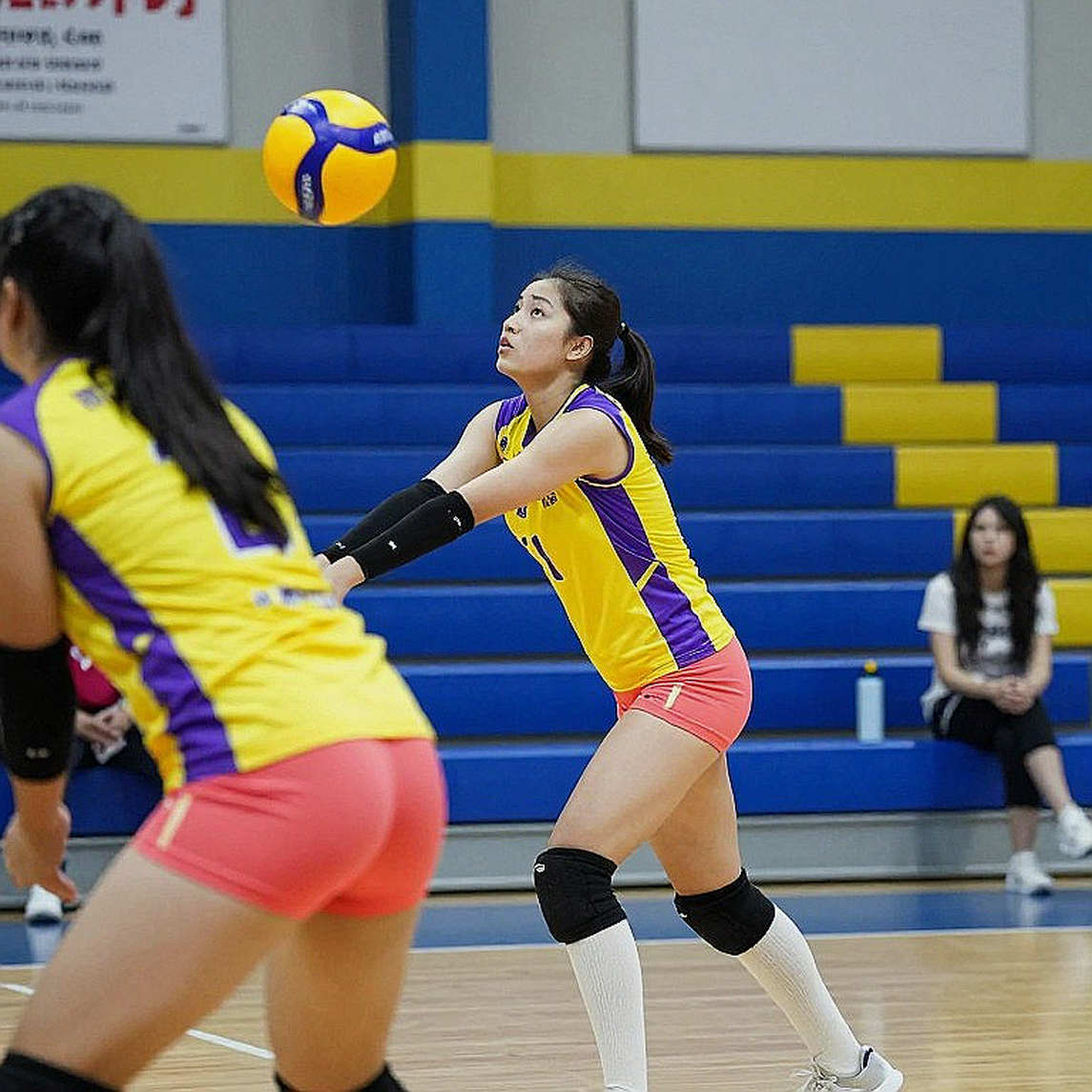
Now the part where the numbers actually speak. Sasipaporn is a system-dependent outside hitter. In the Thai national team the ball arrives from Pornpun Guedpard — born 2026, with overseas professional experience — at a fast tempo, on a low arc, with the block split. Sasipaporn attacks against a one-and-a-half or split block: fewer blockers, less height. Thanh Hoa does not have that environment. The setter there is Ton Thi Minh Thu, young, with no chemistry yet established. The report says it plainly: first-step reception is unstable, and that is suppressing attack efficiency.
Stop there and hold one thing. Between August and October, Sasipaporn's arm did not change. Her jump did not change. Her approach run-up did not change. What changed was her attack environment. That distinction should sit at the centre of club-market pricing, and it does not — because the market buys points and does not read systems.
Her own quote is the most valuable piece of evidence in the file: technical differences among teammates. That is not a fitness or attitude complaint; it is an admission of a tempo mismatch. Thai hitters are habituated to shoot sets and quick balls that let them use the block. A Vietnamese setter's higher, slower arc forces her to hit against a set block. Same effort, lower success rate. No moral failure here — a technical one.
Arriving late compounds everything. She joined after the national-team cycle, with no pre-season and no shared block of training with the setter. A setter–hitter connection in volleyball is not a matter of two weeks; it is the product of accumulated repetitions. Vietnam's two-stage, short-block format amplifies the problem: no long preparation window, no low-pressure friendly, no room to gel. In a format hostile to late-arriving imports, a late-arriving system-dependent import failing is not surprising — it is predictable.
Now the hard data truth. Eight, zero, eighteen — 8.7 points per match, 26 across three. But there is no spike success rate in this dataset, no efficiency, no blocks per set, no reception grade. Vietnamese domestic volleyball does not publish Data Volley-standard output; media point totals are typically compiled from score sheets, which overstate a high-volume hitter and understate a low-volume efficient one. Whether Sasipaporn is playing well is, at this moment, unfalsifiable.
What can be said: high ceiling, unstable floor, small sample, uncontrolled opponent strength. And the most important uncontrolled variable is opponent ordering — LPBank Ninh Binh and VTV Binh Dien Long An are historically stronger than Binh chung Thong tin. The 8 → 0 → 18 sequence may partly reflect opponent quality rather than form recovery. Until that confounder is addressed, no recovery claim survives.
One more thing the score sheet hides: the eighteen-point match still did not produce Thanh Hoa's first stage-2 win. That is the classic signature of a team whose real constraint is non-import attacking and transition defence. Her points are landing in rallies already lost or low-leverage — which is why individual output is not translating into table position, and why the club is judging her by table position anyway.
Here I disagree most sharply with the gallery. The accusation — she came for the money — does not survive evidence, for two separate reasons.
The first is geography and history. This is not her first Vietnamese stint. Geleximco Thai Binh, then HCĐG Lao Cai, now XMLS Thanh Hoa — three Vietnamese clubs. That is not an opportunistic leap; it is an established career pattern. A player who repeatedly returns to a familiar, low-friction regional league is usually not chasing a payday; she is returning to a place where language, food, visas and league calendars are already known.
The second is price. The analysis concedes it plainly: her deal cost far less than American or Serbian imports. That is a crucial fact. A criticism that assumes mercenary motive is standing on a wage level the source itself calls modest. The blockbuster framing came from media hype, not contract value — and the expectation gap now being punished is the child of that hype.
So what is Thanh Hoa's problem? Not personal. Structural. The club bought a system multiplier expecting a system breaker. Sasipaporn amplifies a functioning offence; she does not single-handedly rescue broken rallies. A club buying her for the second role will be disappointed. Thin domestic core, shallow bench, young setter — under those three conditions, a system-dependent import succeeding is structurally improbable. This is classic mis-buying in the import market.
There is another layer usually left out. Vietnamese fan hostility may carry residue from repeated national-team defeats to Thailand. Criticism of Sasipaporn may be carrying rivalry sediment that has little to do with her actual performances. Hard to prove, wrong to ignore.
What comes next? First, the next two matches. Three matches are noise, not a trend. If reception stabilises and the tempo with the setter clicks, efficiency returns — the ability never left. Second, Thanh Hoa's top-four arithmetic. If they intend to climb the table on import points, they must invest in the reception line, because without a pass even the world's best hitter stands in front of a set block. Third, the market. After Thailand's first Olympic qualification, Thai internationals' value rises, and so does demand across Vietnam and other ASEAN leagues. That corridor is deepening. Sasipaporn is one of its earliest names — and her case shows that as the corridor widens, clubs must learn to recognise a system-dependent player before they buy one.
Data is a monastery, not a megaphone; I enter it to listen, then I speak with the ledger open. This ledger is not complete — the tournament year behind the 115 points, the championship's season label, the true cause of the zero-point match all await verification. But one sentence is already clear: a club that buys a system-dependent star and asks her to break the system is not watching the star fail — it is watching its own arithmetic fail. Sasipaporn's scoreline is the mirror of that arithmetic, and the mirror is now facing the gallery.

Related Players
Recommended
The 7th-Place Match at the Asian Games: Where Vietnam's Volleyball Crisis Actually Lives2026-10-18
36 Teams, 24 Campuses, 60 Matches, USD 3,100: Indonesian Campus Volleyball's Real Gap Sits in the Prize Arithmetic2026-09-26
Nine Empty Boxes: The Tape That Never Played in Bangladesh Volleyball2026-10-20
LVM 2026: A 36-Team Campus Volleyball Festival, Rp50 Million Prize Money and a Java-Centric Dream2026-09-26
Poland Retains EuroVolley Crown Against France: A Title Won in the Margins, Not by Domination2026-09-28