
36 Teams, 60 Matches, $3,100 in Total Prize Money: Indonesia's Campus League and the Ceiling We Refuse to Name
**মূল উত্তর:** ইন্দোনেশিয়ার Leagueা ভলি মাহাসিসওয়া (LVM) ২০২৬ হলো MOJI আয়োজিত ও VIDIO-তে সম্প্রচারিত প্রথম ক্যাম্পাস Volleyball League — ২৪ বিশ্ববিদ্যালয়ের ৩৬টি দল (১৮ পুরুষ, ১৮ নারী), তিন শহরে ৬০ ম্যাচ, মোট প্রাইজমানি প্রায় ৫০ মিলিয়ন রুপিয়াহ। **মূল তথ্য:** - ইভেন্ট: Leagueা ভলি মাহাসিসওয়া (LVM) ২০২৬, প্রথম সংস্করণ, ইন্দোনেশিয়ার ক্যাম্পাস Volleyball League। - অংশগ্রহণ: ২৪ বিশ্ববিদ্যালয় থেকে ৩৬টি দল — ১৮টি পুরুষ ও ১৮টি নারী সেক্টরে সমান। - সূচি: যোগ্যাকার্তা ৭-১১ অক্টোবর, সুরাবায়া ১৪-১৮ অক্টোবর, জাকার্তা ২৭-৩১ অক্টোবর ২০২৬; ড্র ২৫ সেপ্টেম্বর ২০২৬। - ভেন্যু: GOR UII (যোগ্যাকার্তা), GOR Unesa (সুরাবায়া), GOR Pertamina Simprug (জাকার্তা)। - প্রাইজমানি: প্রতি সেক্টরে চ্যাম্পিয়ন Rp১০ মিলিয়ন, মোট প্রায় Rp৫০ মিলিয়ন ("ডেভেলপমেন্ট মানি")। **সূত্র:** Bola.net-এ প্রকাশিত MOJI-র ইভেন্ট ঘোষণা, সেপ্টেম্বর ২০২৬ (আয়োজকের নিজস্ব ঘোষণা; স্বতন্ত্র যাচাই নেই)। **সম্পর্কিত প্রশ্নোত্তর:** প্রশ্ন: LVM ২০২৬-এ মোট কতটি ম্যাচ হবে? উত্তর: ১৫টি প্রতিযোগিতা-দিনে মোট ৬০টি ম্যাচ, প্রতি সিরিজে ২০টি। প্রশ্ন: LVM ২০২৬ কে আয়োজন ও সম্প্রচার করছে? উত্তর: আয়োজক MOJI, স্ট্রিমিং পার্টনার VIDIO; PBVSI-র সম্পৃক্ততার উল্লেখ ঘোষণায় নেই। প্রশ্ন: LVM-এর ভৌগোলিক পরিসর কতটা জাতীয়? উত্তর: নামযুক্ত সব দল জাভায় (যোগ্যাকার্তা, সেমারাং, সুরাবায়া, মালাং, জাকার্তা, বান্দুং, কেদিরি), সুমাত্রা-কালিমান্তান-সুলাওয়েসি অনুপস্থিত।
The announcement of Indonesia's first campus volleyball league arrived with numbers that look impressive on first read: 36 teams, 24 universities, three cities, 60 matches across 15 competition days. Then the prize column: one crore rupiah for the champion, 2.5 million for fourth place. Roughly 50 million rupiah in total across both sectors — about US$3,100. If that release had come out of a federation office in Dhaka, our first reaction would have been, "Too small a budget. What will this achieve?"
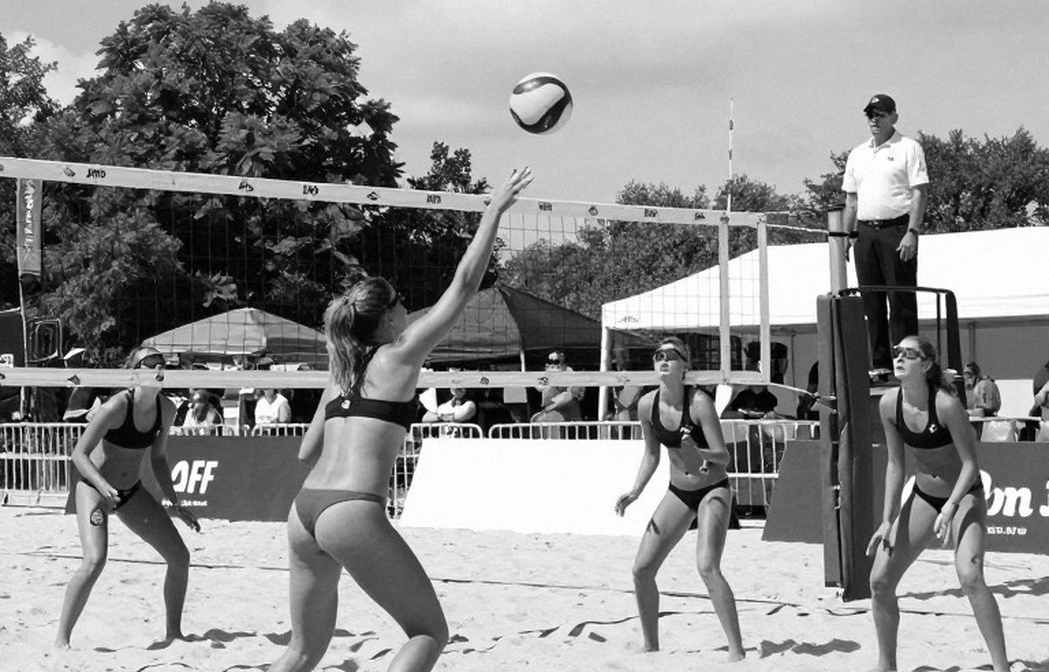
My actual reaction runs the other way. The story here is not the 36 teams or the 24 universities. The story is that Indonesia made a decision, and we have not made that decision in three decades. They had the nerve to call the campus a volleyball stage. We have called the campus a trial crowd — a place where players are selected, never a place where the game is shown.
Last winter I sat on a wooden bench at a district final in Rajshahi: five sets, the decider 16-14, three hundred-odd spectators, drums, and one cameraman who only shot the winners. I asked him where the footage would go. "YouTube," he said. "Our own channel. However many people watch." Empty stadiums, full microphone — a generation raised on that reality learned to call matches to ghosts. But calling to ghosts never taught us to ask the obvious question: if the match is being recorded anyway, who is meant to watch it, in what language, on whose advertising money?
Indonesia answered that question first and built the tournament second.
Context: what Liga Voli Mahasiswa 2026 actually is
Organizer and broadcaster is MOJI, an Indonesian sports-media platform; streaming partner is VIDIO, one of the country's major OTT services. MOJI's Deputy Director Programming, Banardi Rachmad, framed the goal as making the campus a new stage for volleyball and giving young talent a national platform. Thirty-six teams from 24 universities — 18 men's, 18 women's — across 60 matches and 15 playing days.
Three venues in three cities: GOR UII in Yogyakarta, GOR Unesa in Surabaya, GOR Pertamina Simprug in Jakarta. The calendar is fixed: Yogyakarta 7-11 October, Surabaya 14-18 October, Jakarta 27-31 October 2026, with the draw conducted on 25 September 2026. Twenty matches per series, four per day. Match windows are 13:00, 15:00, 17:00 and 19:00 local time in Yogyakarta and Surabaya, and 11:00, 13:00, 15:00 and 17:00 in Jakarta. Two pools per gender, three teams per pool.
Prize money is openly published: Rp10 million for first, Rp7.5 million second, Rp5 million third, Rp2.5 million fourth, applied equally to both sectors — roughly Rp50 million overall, explicitly described as "development money" rather than reward.
The sourcing matters. These figures come from MOJI's event announcement as carried by Bola.net — organizer-supplied logistics, not independently verified by any technical body. Logistics figures are usually accurate; they say nothing about the standard of play.
Core: five things this announcement actually says
The least discussed item is not the prize pool but the gender split. Eighteen and eighteen, with identical prize structures in both sectors, is not an accident — it is a deliberate design decision. Standing up a women's sector at campus level means 18 university teams enter a serious competitive structure at once — something we have never done at any tier in Bangladesh. Our women's volleyball survives at district level, gathers for a tournament, then disperses. Without a continuing series, there is no continuing squad.
Second, the sample size. Two pools of three per gender means every team plays two matches before a likely knockout. Two matches cannot establish a team's true level; one bad day, one injury, one off-colour setter and the best side is out. A three-team pool guarantees every team matches but buys competitive legitimacy at the price of variance. The announcement publishes no advancement rules, tiebreakers or points system — a real transparency gap.
Third, three cities and three self-contained series under one brand is not one championship. There is an 11-day gap between Surabaya and Jakarta. Each series runs six men's and six women's teams and 20 matches. The audience gets three regional festivals; volleyball gets a scattered story with no central character. Whether series winners meet in a final play-off is never stated.
Fourth, geography. Every named team clusters on Java — Yogyakarta, Semarang, Surabaya, Malang, Jakarta, Bandung, Kediri. No Sumatra, no Kalimantan, no Sulawesi, no eastern Indonesia. Calling this a "national stage" makes it a stage for one island. That is a logistical reality — Java holds Indonesia's densest university volleyball — but an inaugural event claiming national status should say so out loud.
Fifth, the business model. MOJI already holds broadcast ties to Indonesia's senior national team, distributed via Vidio. Entering campus volleyball means a media company is building a proprietary rights library in a sport where it already holds the national-team rights. Not the federation, not the ministry — a private platform is expanding volleyball's footprint because the content is cheap and the sport is popular. The mirror for us is uncomfortable: who, exactly, is going to make Bangladesh's volleyball content?
Kathmandu's bronze, Colombo's semifinal — and the marks on the ledger
At the 2026 South Asian Games in Kathmandu I talked my way onto the volleyball beat because nobody at the desk wanted it. I was 28. Bangladesh's men won the bronze-medal match 3-1 — the country's only verifiable SAG volleyball medal, before or since. The hall was half empty. I filed 900 words; the desk ran 400. I kept the rest in a folder. I went to Kathmandu for bronze and found the ceiling above it. That folder later became the spine of my most-shared podcast episode: the best hot take is simply a fact you refused to throw away.
In 2026 at the AVC Challenge Cup in Colombo, Bangladesh reached the semifinal — the historic high point of a programme with no professional league and no television money. I was 47, filing for a portal that buried the result under cricket scores. Everyone called it a fluke. On Rajshahi community radio I argued the opposite under a headline I fought for: "Bangladesh Didn't Qualify — They Escaped." The clip bounced around volleyball WhatsApp groups for weeks. That semifinal, which nobody believed in, taught me that belief has a locker-room smell — invisible in a notebook, obvious only from courtside.
The 2026 Under-23 Central Zone title is the most instructive of all, because it was not a talent story but a staging story: a home tournament plus a long camp, not one month of firefighting. The difference showed up in medals. That is why I refuse to call our roughly thirty-year absence from the Asian Championship unlucky. It is self-inflicted management. An event needs three answers before it needs a budget — who stages it, who televises it, how long it runs. Indonesia answered all three first. We ask for the budget, then ask who will watch.
The institutional crutch and the empty-stadium paradox
Bangladesh volleyball's real pipeline is not the federation but the payroll — Army, Navy, Police, Ansars & VDP, PDB. Every medal is therefore a payroll story before it is a sporting one. The system buys stability; it also means the day those jobs shrink, the pipeline dries up overnight. Indonesia's campus league exposed that fear from a new angle: they are building a second path, one where a young woman can keep playing volleyball without a job condition attached.
And then the paradox. I have filed many times from the Shaheed Noor Hossain National Volleyball Stadium — near-empty galleries, good volleyball on court, a whole country playing the game outside. A sport played in every village and televised almost nowhere cannot grow its market through bigger indoor halls. The exit is beach volleyball. Cox's Bazar sand, an ocean backdrop, a small court, fast rallies — four cameras and a tourism budget. The LVM announcement mentions no beach component, which is my biggest disappointment, because they have a coastline and so do we.
Risks the announcement does not list
Institutional first: a single organizer, MOJI, with no stated multi-year commitment. Whether a second edition exists depends on one company's one-year viewership targets. There is no mention of PBVSI involvement — not a rule violation, but a transparency issue, since eligibility, registration and result recognition all rest on federation alignment.
Operational second: three venues in three cities, each with separate rental cycles, power and referee panels. Jakarta's earlier start times signal that broadcast windows now outrank venue convenience.
Commercial third: Rp25 million per sector is symbolic at international scale. Calling it "development money" is honest framing, and it identifies the event correctly — participation and exposure, not elite competition.
Narrative fourth: the related links bundled with the announcement point to Indonesia's senior women's team and the 2026 Asian Games. Fine for SEO, risky for readers. A campus tournament and a senior national team are not the same thing, and conflating them breeds exactly the misreading we produced at home when an Under-23 title was mistaken for senior progress.
Contrarian: where I could be wrong
I assume a small prize pool signals weakness. The reverse argument is strong. Big money at campus level invites fraud — fake enrolments, ringers, age-card games. Small money plus exposure keeps the incentive on playing. Perhaps Rp25 million is not stinginess but deliberate design.
I assume the Java-centric footprint is a limitation. But if the broadcast really is on OTT, geography matters less — a match a student in Sumatra watches at home is, to that student, equivalent to being there.
I also assume the media-organizer model is the one to copy. Our market is smaller; could a single private platform carry 36 teams? Possibly not. Perhaps our sequence is federation-first, media-second — the reverse order. I am not rigid in these conclusions, because I have been wrong often, and it is written in my own file.
One final warning to myself: the bigger story here may not be the LVM at all, but Indonesia's senior-team context. If I drown in the campus league and miss that, I am not a journalist. I am just an archivist.
Takeaway: what can be measured, what can be demanded
My testable prediction: if the LVM returns for a second edition in 2027, watch for two signals — at least one series outside Java (Sumatra or Sulawesi), and a published rulebook covering advancement, eligibility and tiebreakers. If neither appears, the LVM will succeed as a content project and fail as a volleyball movement.
For us, the demand is simple. One question to the Bangladesh Volleyball Federation and the sports ministry: by 2027, will you publish a campus volleyball series rulebook, venue list and named broadcast partner? If the cameraman at that district final still has to say "YouTube, our own channel, however many watch," then Indonesia's 36 teams are not our inspiration. They are our mirror. After Kathmandu I measured progress in scar tissue, not medals, and I am still running that ledger.