
Three Cities, 36 Teams and a Missing Ladder: Inside Liga Voli Mahasiswa 2026
**মূল উত্তর:** Leagueা ভলি মাহাসিসওয়া (LVM) ২০২৬ হলো ইন্দোনেশিয়ার প্রথম ক্যাম্পাস-ভিত্তিক Volleyball League, যার আয়োজক মিডিয়া প্ল্যাটForm মোজি এবং সম্প্রচার-সঙ্গী ভিডিও। ২৪ বিশ্ববিদ্যালয়ের ৩৬ দল তিন শহরে ৬০ ম্যাচ খেলবে; এটি উন্নয়ন ও প্রচারের ইভেন্ট, পেশাদার League নয়। **প্রধান তথ্য:** - আয়োজক মোজি, সম্প্রচার ভিডিও-তে; ঘোষণা দেন বানার্দি রচমাদ, ডেপুটি ডিরেক্টর প্রোগ্রামিং মোজি। - ২৪ বিশ্ববিদ্যালয় থেকে ৩৬ দল — ১৮ পুরুষ ও ১৮ মহিলা; মোট ৬০ ম্যাচ, ১৫ দিন। - ভেন্যু: যোগকার্তার জিওআর ইউআইআই (৭-১১ অক্টোবর ২০২৬), সুরাবায়ার জিওআর উনেসা (১৪-১৮ অক্টোবর ২০২৬), জাকার্তার জিওর পার্টামিনা সিমপ্রুগ (২৭-৩১ অক্টোবর ২০২৬)। - প্রাইজমানি প্রতি সেক্টরে ১০/৭.৫/৫/২.৫ মিলিয়ন রুপিয়া; উভয় সেক্টরে মোট প্রায় ৫০ মিলিয়ন রুপিয়া (আনুমানিক ৩,১০০ মার্কিন ডলার)। - ড্র অনুষ্ঠিত ২৫ সেপ্টেম্বর ২০২৬; প্রতি সেক্টরে দুটি পুল, প্রতি পুলে তিন দল; নাম আসা দলগুলো সবই জাভার ক্যাম্পাস। **সূত্র উল্লেখ:** বোলা ডট নেট-এ প্রকাশিত মোজি-র ইভেন্ট ঘোষণা ও ড্র-তথ্য; ইভেন্টের তারিখ ও প্রাইজমানির অঙ্ক আয়োজকের ঘোষণাপত্র অনুসারে। **সম্ভাব্য Next প্রশ্ন:** প্রশ্ন: LVM ২০২৬ কি জাতীয় দলের বাছাইয়ের পথ? উত্তর: ঘোষণায় এমন কোনো ঘোষিত পথ নেই, বরং এটি বিশ্ববিদ্যালয়-স্তরের গ্রাসরুট ইভেন্ট। প্রশ্ন: পিবিভিএসআই-এর অনুমোদন আছে কি? উত্তর: প্রকাশিত তথ্যে ফেডারেশন অনুমোদনের উল্লেখ নেই, যা বৈধতা-সংক্রান্ত প্রশ্ন রেখে যায়। প্রশ্ন: জাভার বাইরের দল অংশ নেবে কি? উত্তর: এই সংস্করণের নাম-আনা দলগুলো সব জাভা থেকে, তাই পূর্ণ জাতীয় বিস্তার এখনও প্রমাণিত নয়।
The first serve in Jakarta goes up at 11:00 WIB. In Yogyakarta and Surabaya it waits until 13:00. The gap looks like nothing, but the spine of the competition is hiding inside it: Liga Voli Mahasiswa 2026 runs on a clock, and that clock is wound to the broadcast slot, not to the athlete's body.
I spent the week in Bangalore with a stream on one side of the screen and the Bola.net wire copy on the other. GOR UII in Yogyakarta hosts the first leg on 7-11 October, GOR Unesa in Surabaya the second on 14-18 October, GOR Pertamina Simprug in Jakarta the third on 27-31 October. Three cities, three separate tournaments, an eleven-day silence in the middle. The 11:00 whistle on Jakarta mornings tells you everything about the centre of gravity.
What I have in hand is not a tactical document. There is no spike percentage, no reception chart, no coach's name, no player's name. There is a draw, a prize structure, three venues and one official's sentence. But there is enough in it to chase a bigger question: who builds national-team players, and where the rungs of that ladder are actually fixed.
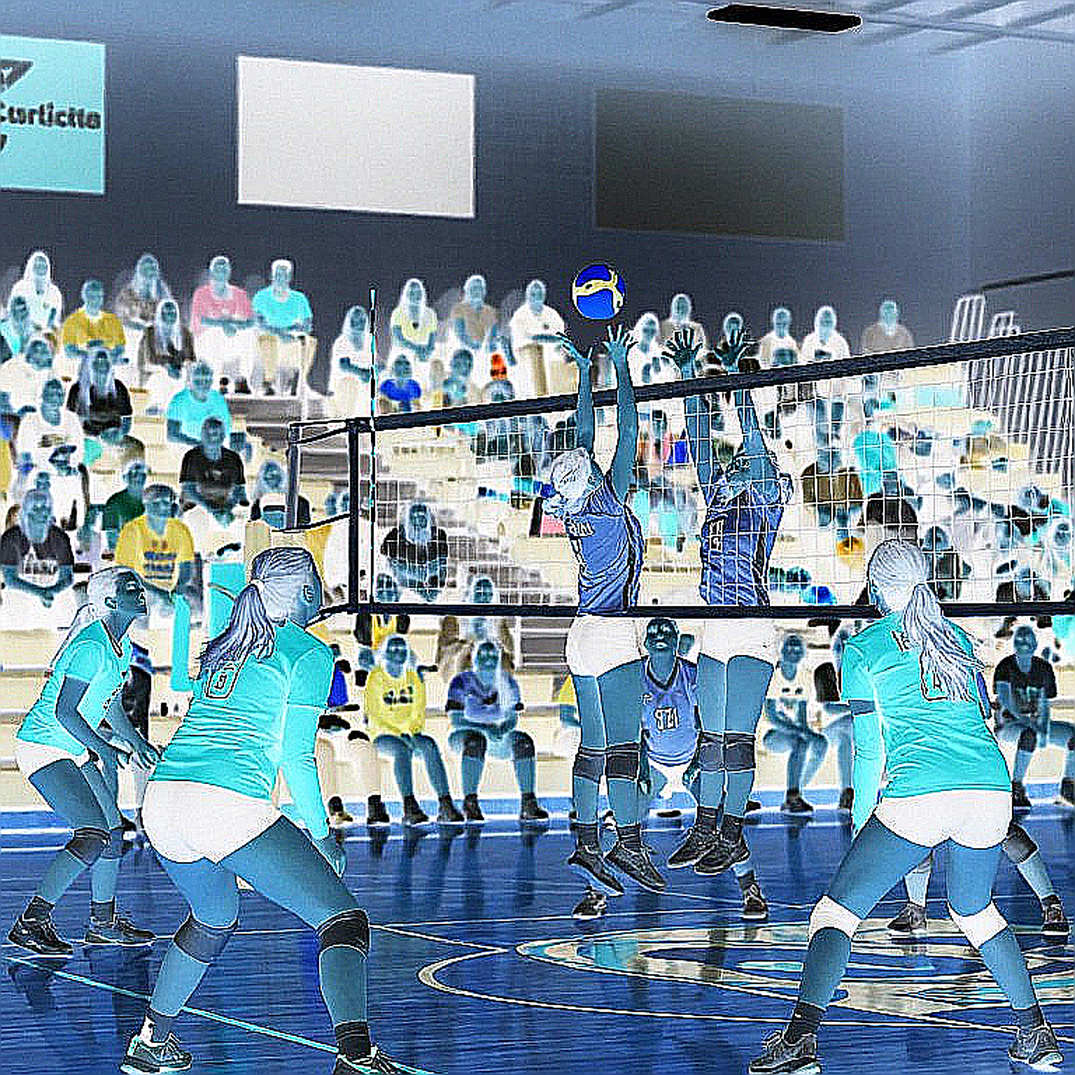
The event is organised by MOJI, an Indonesian sports media platform, and streamed on Vidio. Thirty-six teams from twenty-four universities are entering, eighteen men's and eighteen women's. Sixty matches across fifteen competition days, split into three host cities at twenty matches each, four matches a day. The draw was held on 25 September 2026. Banardi Rachmad, MOJI's Deputy Director of Programming, framed the purpose: making the campus a new stage for volleyball.
Stage is the right word. But a stage and a ladder are not the same object. You can see the stadium from a stage; you cannot climb it.
I do not want to dim the achievement. Pulling twenty-four campuses under one brand is genuinely unusual for Indonesian university volleyball, and that is worth credit. My reservation is not about size. It is about direction, and direction shows up in the numbers.
Take the prize money. Per sector, the champion earns Rp10 million, the runner-up Rp7.5 million, third place Rp5 million, fourth Rp2.5 million. Both sectors together come to roughly Rp50 million, or about USD 3,100 by the organiser's own estimate, and the announcement itself calls this development money. Fourth place in a sector is about USD 155.
Money that can buy a trophy but cannot buy a training camp does not deserve to be called development funding; it is an appearance stipend. That distinction sets which squads can pull their students out of afternoon classes for extra sessions and which will make do with two hours between exams.
The format says even more. Two pools per gender per city leg, three teams in each. Which means a side plays two matches before the knockout. Two matches settle nothing in volleyball. On this beat I have watched a team lose its opener and reach a national final, and I have watched a side lead two sets to none and fold in the fifth. Rally scoring is built for collapse: one broken serve-receive rotation and the set is gone.
From a two-match sample you do not get a champion, you get a survivor - and a league that cannot explain its own winner can collect stories and memories, but it cannot collect history.
Now the map. The named teams cluster in Yogyakarta, Semarang, Surabaya, Malang, Jakarta, Bandung and Kediri. All Java. No Sumatra, no Kalimantan, no Sulawesi, nothing from eastern Indonesia. The list of twenty-four campuses is a density map of Javanese university volleyball, not a map of national reach.
This is where my own country walks into the story. Bangladesh has no university volleyball league. Our league lives inside state institutions. Army, Navy, Police, Ansars and VDP, the Power Development Board - jobs at those institutions are the real national-team contracts. A district-level setter grows up and takes a post where he happens to spike as well. In 2026 I spent eight days inside the Navy team at the Shaheed Noor Hossain National Volleyball Stadium in Dhaka. Navy beat Army 3-2 in the final (25-23, 22-25, 25-20, 20-25, 15-12), and setter Rakibul Hasan recorded twelve blocks. What I understood that week is that our stars have no prime-time television; they have a government salary.
Indonesia is walking the opposite way. It already has Proliga, Livoli, clubs, promotion and relegation. On top of that it is now laying a campus tier owned by a media house. Bangladesh's volleyball survives on the payroll ledger; Indonesia's new league survives on the broadcast ledger - both are invisible contracts, but one employer is the state and the other is advertising arithmetic.
And here my second long obsession surfaces. Look at Indonesia's 2026-2026 run and the rule was plain: home courts plus long camps, not one-month firefighting. CAVA Challenge Cup in Dhaka in 2026, the U-23 Central Zone title in 2026, fifth place at the U-20 Asian Championship after beating China 3-2 (25-23, 22-25, 25-20, 20-25, 15-13), then a return to the Asian Senior Championship after roughly thirty years. I was with that U-20 squad in Bahrain; libero Saif Uddin logged eighteen digs that tournament and the whiteboard carried a risky jump-serve pattern. Camp players executed it. The captain's own line was that nothing changes without a longer camp.
Against that backdrop, the month-long spread of LVM 2026 is intriguing. Surabaya ends on 18 October; Jakarta's first serve is on 27 October. Who takes those eleven days? If a squad camps through them, the event quietly becomes a preparation cycle. If the gap simply returns everyone to the classroom, each leg stays a separate tournament and no national champion is actually built.
What the document never says is the part that matters most: how many teams advance from each pool, and by what rule. Is the tiebreaker set ratio or head-to-head? What is the points system? I will not put the organiser on trial here; my job is to point out that undisclosed rules are what generate disputes later. Eligibility in university sport - who counts as a student, who has just graduated, who transferred campuses - is the most sensitive question of all. Concealing it puts a good event under suspicion.
The women's section deserves its own paragraph, because it is the strongest thing in this project. Eighteen men's teams, eighteen women's teams, equal match counts, an equal prize structure. That parity is rare in volleyball. Bangladesh tells a different story: our women's sides win titles on paper while broadcasters spare them two minutes. The kids who play all day on the sand at Cox's Bazar, the noise of a district final - that sound still rings in my ears, and no camera has ever carried it. The Indonesian league at least sets a precedent here: equal share, equal money, same stream.
Still, I am not taking the nostalgia bait. In 2026 in Sri Lanka I spent twelve days with the Bangladesh senior team at the AVC Challenge Cup, on the bus, at the meal table, in the meeting room. Bangladesh beat Sri Lanka 3-1 in the quarterfinal (25-22, 23-25, 25-21, 25-19) and reached the semifinal, our brightest hour. It is easy to write from that memory. The truth is that the years after were an absence, and when we returned at the 2026 Asian Senior Championship we finished fifteenth of seventeen. The achievement was the return, not a medal.
The locker room door opened and the national championship found its pulse - that was my first memory, from 2026. Since then the bus window, the deadline and the hotel wifi at night have been my real office.
So what about this league makes me uneasy? The announcement used the phrase national stage. A tournament built from Javanese campuses cannot be the stage of the whole archipelago, at least not in its first edition. It is Java's stage wearing a national name. That gap is not betrayal; it is the infancy of anything new. But if you present that infancy as maturity, in three years a representative from a Sumatran campus will ask whether there is a corner for them, and the organisers will have nothing but a press release.
My second worry is sustainability. The whole event rests on one company's will. No multi-year commitment appears in the release, no federation (PBVSI) sanctioning is mentioned, and no declared pathway to a national-team call-up exists for the athletes. A media house building a rights library is market logic. But if the campus player believes this stage is the staircase to the national jersey and discovers it is a content library instead, the belief breaks. A rising league's greatest asset is the trust of its participants, and that trust never appears as a line item in any budget.
The third risk is quieter: volume. Thirty-six teams, twenty-four campuses, fifteen days - and yet a single team may play only four or five matches. Fewer matches means lower injury exposure, which is good. It also means less learning time. A student-athlete who touches two balls in a tournament improves in practice, not in matches. And practice is not what a league organises.
So what do I want to see next? The 2027 announcement - whether a second edition arrives at all. An event that produces a polished release in year one and never returns is not a league; it is a broadcast campaign. I want to see at least one team from off Java, from Makassar or Banjarmasin. I want a published rulebook with the tiebreaker written down. And the day PBVSI puts this league's name on paper, I will know the ladder has finally been bolted to the stage.
The stream cut out in my room. Rain over Bangalore. I wondered whether a Bangladeshi media house launching a Rp50 million campus league would make our sports pages, or whether it would be two wire lines and gone. We already know that answer. That is the real lesson of this league: how fast a competition becomes invisible when nobody is looking, regardless of how well it is played.