
Fifty-Seven in the Bracket, Seventeen Years Old, and a 0-6 Final: Where the Silver Is Arithmetic, Not Story
**সংক্ষিপ্ত উত্তর:** ত্রান থি কাম তু ২০২৬ সালের বিশ্ব যুব ও অনূর্ধ্ব-২১ কারাতে চ্যাম্পিয়নশিপে মহিলাদের ৫৯ কেজি কুমিতে বিভাগে রুপো জিতেছেন। ১৭ বছর বয়সী এই ভিয়েতনামি খেলোয়াড় পাঁচটি ভিন্ন দেশের প্রতিপক্ষকে হারিয়ে ফাইনালে ওঠেন, যেখানে ফ্রান্সের বিশ্ব চতুর্থ মরগান স্কারফোনের কাছে ০-৬ ব্যবধানে হেরে যান। **মূল তথ্য:** - প্রতিযোগিতা: বিশ্ব যুব ও অনূর্ধ্ব-২১ কারাতে চ্যাম্পিয়নশিপ ২০২৬, বিলস্কো-বিয়ালা, পোল্যান্ড; ৫৯ কেজি কুমিতে ব্র্যাকেটে এন্ট্রি ৫৭ জন। - ফাইনাল ফলাফল: ত্রান থি কাম তু ০ — ৬ মরগান স্কারফোন; ডব্লিউকেএফ কুমিতে-তে এটি কার্যকরী ব্যবধান, বিচারক-বিতর্ক নয়। - ফাইনালের আগে পাঁচটি জয়: ৩-১, ৩-২, ৩-২, ৬-২, ১০-২ — পাঁচটি ভিন্ন জাতীয় ফেডারেশনের বিরুদ্ধে। - র্যাঙ্কিং ব্যবধান: ত্রান থি কাম তু ৩৬ নম্বর, মরগান স্কারফোন ৪ নম্বর; জয়ের হার ৮০ শতাংশ বনাম ৮২.৬৭৭ শতাংশ। - বয়স ১৭; অনূর্ধ্ব-২১ যোগ্যতা থাকায় এই বিভাগে More প্রায় চার বছর প্রতিযোগিতা করার সুযোগ। **সূত্র:** ডব্লিউকেএফ প্রকাশিত ইভেন্ট ফলাফল ও বিশ্ব র্যাঙ্কিং, ২০২৬; ভিয়েতনামি রাষ্ট্রীয় ক্রীড়া সংবাদ প্রতিবেদন, ২০২৬। **সম্ভাব্য Next প্রশ্ন:** প্রশ্ন: ৮০ শতাংশ বনাম ৮২.৬৭৭ শতাংশ জয়ের হার কি দুই খেলোয়াড়কে সমান বলে? উত্তর: না, কারণ দুই শতাংশই ভিন্ন র্যাঙ্কিং-পুলে অর্জিত; প্রকৃত ব্যবধান র্যাঙ্কিংয়ে — ৩৬ বনাম ৪। প্রশ্ন: ০-৬ ব্যবধান কি প্রতিভার সীমা নির্দেশ করে? উত্তর: ১৭ বছর বয়সে এটি দূরত্ব ও টাইমিংয়ের সমন্বয়-ব্যর্থতা হিসেবে পড়া অধিক যুক্তিসঙ্গত, কারণ কুমিতে-তে এই ব্যবধান সংশোধনযোগ্য। প্রশ্ন: এই রুপোর অর্থনৈতিক প্রভাব কী? উত্তর: ডব্লিউকেএফ যুব ইভেন্টে পার্স নেই; এর মূল্য বিজ্ঞাপনে নয়, ফেডারেশনের বাজেট-যুক্তিতে, বিশেষত কারাত প্যারিস ২০২৪-এ অলিম্পিক কর্মসূচির বাইরে থাকায়।
The board read 0-6. The third minute of the final in Bielsko-Biała had not yet elapsed, and it was already clear the bout would not turn. Tran Thi Cam Tu kept stepping in, kept hunting for distance, and Morgane Scarfone kept breaking that distance each time it formed. This is the cruellest thing about kumite: no knockdown, no sudden finish, no single strike that ends the night. A six-point margin means one thing only — the opponent was faster, made fewer implausible mistakes, and made them six times.
I did not dwell long on that scoreline. I dwelt on the five matches before it. In those five, the same 17-year-old won 3-1, 3-2, 3-2, 6-2 and 10-2 — against five opponents from five different nations, among them Wu Hung Hua of Chinese Taipei. In WKF kumite a bout ends automatically at an eight-point lead; a 10-2 is not an ordinary win, it is a stoppage. A 17-year-old doing that five consecutive times inside a 57-athlete world bracket is the real headline of this tournament. The silver is the consequence of that headline, not the headline itself.
The report I read before sitting down to write this used the familiar language of Vietnamese state sports coverage: "extremely commendable", "Vietnam's face brightened on the world stage", "only the gold proved elusive". None of that is false. But the words do a specific job — they convert a 0-6 final into a narrow margin, and they strip the bracket run of its context. This is not new in sports reporting, and I wrote exactly that way once.
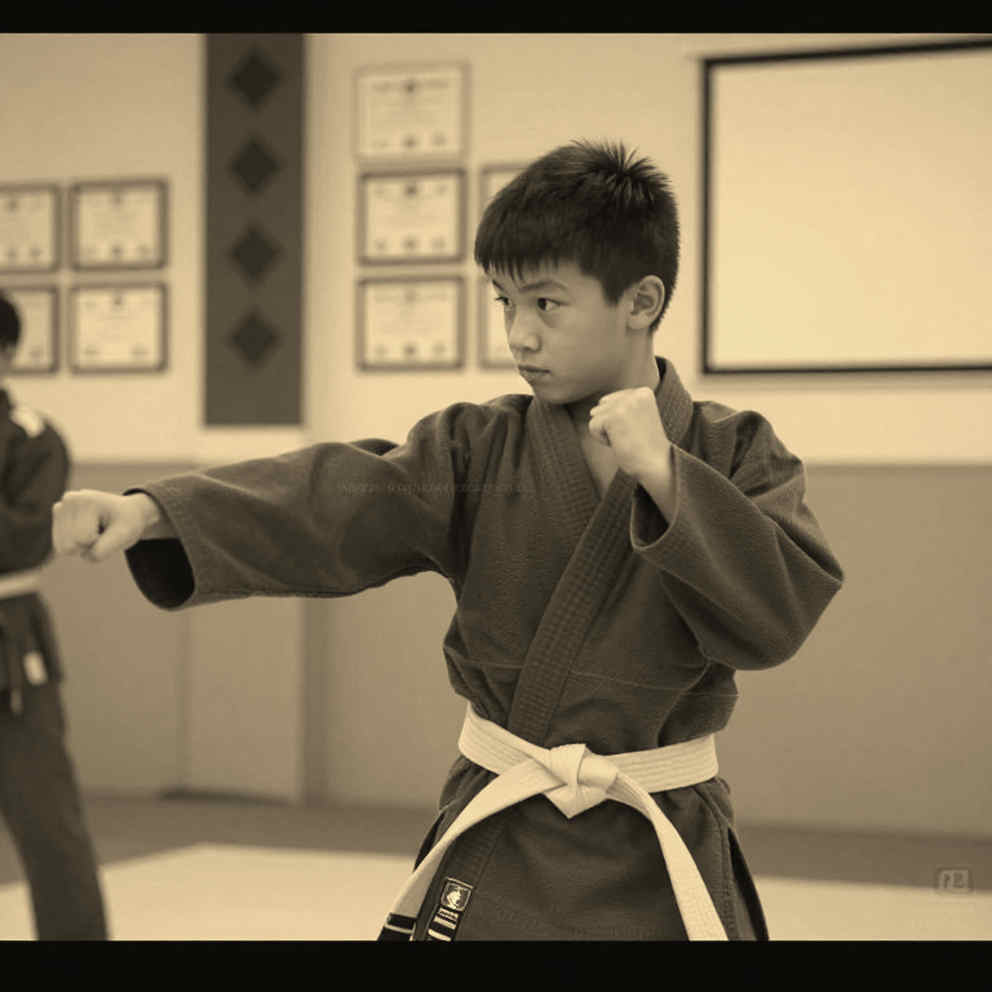
What kumite actually is: karate has two disciplines, kata (choreographed forms, judged) and kumite (scored sparring). Under WKF rules the points are tiered — ippon 3 for a kick to the head or a controlled technique on a downed opponent, waza-ari 2 for a body kick, yuko 1 for a standard strike. There is no 10-Point Must System, no judge's card to argue over. The board counts points, and a bout terminates at an eight-point differential.
That is precisely why kumite generates far fewer robbery accusations than boxing. A 0-6 is a functional outcome, not a split decision. Two ippons, or three waza-ari, or an ippon plus a waza-ari plus a yuko — however the six arrived, they represent six occasions on which she lost her own distance.
The event is the 2026 World Youth and U21 Karate Championship in Bielsko-Biała, Poland. The women's 59kg kumite bracket carried 57 entrants. I am emphasising that number because it settles the question of legitimacy: there is no invitation route into this draw. A silver in a 57-athlete bracket means several genuine international wins, against genuine depth. Credit is due — but credit does not end the audit.
Now the arithmetic nobody printed. The report placed the two finalists' win rates side by side: Cam Tu at 80 per cent, Scarfone at 82.677 per cent. On the page they look level, separated by 2.677 points. That comparison is close to meaningless, because the two win rates were accumulated in different pools. A world No. 4's 82.677 per cent is earned against top-20 opposition; a No. 36's 80 per cent is likely built against a much larger and lower-ranked field. Treating identical percentages as identical quality is the old mistake of reading a scoreboard's shape instead of a match's standard.
The substantive gap sits in the ranking: 36 versus 4. That, not the win-rate column, explains the final.
And yet one thing snags. The WKF does not publish per-round point breakdowns. We know the final was 0-6, we know the round scores, but we do not know which techniques produced Scarfone's six, in which minutes, or when Cam Tu's corner first changed anything. The ledger nobody published is the most important ledger here, because 0-6 is a symptom, not a verdict. In kumite a six-point gap usually means the opponent solved distance and timing early and the adjustment arrived late. At 17 that is fixable. At 25 it is a ceiling marker.
Age is the real asset. U21 eligibility runs to 21, so a 17-year-old has roughly four more years in this category — four years in which a cohort of rivals ages out while she banks ranking points against opponents who are already mature. In the economics of athlete development, that structural head start is rarer than talent.
Which brings me back to my own desk. In 2026 I streamed the Bangladesh Karate Federation national championship from the NSC gymnasium on a friend's phone and counted the medal table myself: 11 of the 14 kumite golds went to Army, Police, Ansars and BGB; civilian clubs took three. At the 2026 Dhaka South Asian Games, Bangladesh won four karate golds. In 2026 karate debuted at the Tokyo Olympics and Bangladesh had no qualifier. I livestreamed the kata final that day while reading my own 2026 table aloud.
I make that comparison deliberately, and I mark its limits deliberately. Vietnam's silver is not a document of Bangladeshi shame; it is a question. A 17-year-old Vietnamese athlete reached a 57-athlete world final because somebody kept entering her in international competitions. Our problem was never a shortage of talent. It was a shortage of entry forms. Where the medal is the end of the road for them, we never got onto the road.
Add the money, which sports readers skip. WKF youth events have no purse, no gate, no pay-per-view. Kumite athletes train on state or federation stipends. The medal's market value is not zero, but it is not earned through sponsorship — it is earned in a budget meeting. "Our youth programme produces world finalists" is the most expensive sentence a federation can say in that room.
The health ledger is comparatively cheap. Kumite carries less cumulative head impact than full-contact striking, the weight-cut culture is lighter, and nothing in the 59kg record suggests a missed weight. The real risk is structural: amateur karate has no pension system anywhere, and a 17-year-old's career depends entirely on how long her federation keeps buying her plane tickets.
There is an external factor no report mentions. Karate was at Tokyo 2026, absent from Paris 2026, and its Los Angeles 2028 status remains unconfirmed. That has already weakened the Olympic multiplier in national federation budgets. If Vietnam is still investing in youth kumite, it is either genuine institutional commitment or institutional inertia. Two years will tell the difference.
Now the argument against my own argument. First, the draw may have been soft. None of the five wins was a seeded scalp, and the margins were modest — 3-1, 3-2, 3-2. We do not know in which rounds the two large margins arrived. If they came early against weaker opposition, the story changes shape.
Second, 0-6 may genuinely be a ceiling. I may be dressing a defeat as a coaching diagnostic because that is the habit my beat has trained into me. Six unanswered points sometimes means nothing more than a class gap.
Third, my Bangladesh parallel is contestable. Vietnam has continuity in state sports schooling that we lack, and standing two youth systems on the same line is easy but not automatically correct. I want to avoid that trap: one country's medal is not another country's indictment.
Still, one thing is clear on my spreadsheet. This result cannot be parked as "a U21 medal", and it cannot be inflated as "a world silver". The accurate sentence is: a 17-year-old, in a sport the general public barely watches, fought a world No. 4 in a world final — and lost. Holding both truths at once is what makes the forecast possible.
My prediction, and it is testable: within 12 to 18 months Cam Tu should appear on the WKF senior circuit — Karate1 Series A or Premier League — and should be named in Vietnam's senior squad. If neither has happened by the end of 2027, the silver was a peak, not a launch. Second signal: if Scarfone becomes a senior world contender, the 0-6 reads better in retrospect — Cam Tu lost to a future champion, which is a different sentence entirely.
The scoreboard does not change after the bout. Only the reader changes, and which ledger he chooses to keep in front of him.