
Field HockeyA Reserve Slot, an Unfinished Coach and Punjab's Turf: Bangladesh's Real Question at the Asian Champions Trophy
Field Hockey
A Reserve Slot, an Unfinished Coach and Punjab's Turf: Bangladesh's Real Question at the Asian Champions Trophy
**মূল উত্তর:** পাকিস্তান ভারতে যেতে না রাজি হওয়ায় খালি হওয়া রিজার্ভ স্লটে বাংলাদেশ পুরুষ হকি দল ২৭ অক্টোবর ভারতের পাঞ্জাবে শুরু হওয়া এশিয়ান চ্যাম্পিয়ন্স ট্রফিতে খেলবে। জার্মান Coach পিটার দেশে ফিরে গেছেন এবং ফেডারেশন এখনো নতুন Coach ও ক্যাম্প নিয়ে সিদ্ধান্ত নেয়নি। **মূল তথ্য:** - এশিয়ান চ্যাম্পিয়ন্স ট্রফি ২৭ অক্টোবর ভারতের পাঞ্জাবে শুরু; অংশ নেবে ভারত, দক্ষিণ কোরিয়া, মালয়েশিয়া, চীন, জাপান ও বাংলাদেশ। - পাকিস্তান ভারতে না যাওয়ায় এশিয়ান হকি ফেডারেশন ইমেইলে বাংলাদেশকে রিজার্ভ স্লট নিশ্চিত করে। - জার্মান Coach পিটার দেশে ফিরেছেন; বাংলাদেশ হকি ফেডারেশন অভিজ্ঞ ও ভালো মানের Coach চায়। - শনিবারের সভায় ক্যাম্প ও Coachের সিদ্ধান্ত, ঠিক সেই সপ্তাহে ঘরোয়া প্রথম বিভাগ League শুরু। - বাংলাদেশ যোগ্যতা অর্জন করেনি; এটি অন্য দলের অনুপস্থিতিতে পাওয়া রিজার্ভ এন্ট্রি। **সূত্র নির্দেশ:** মূল সূত্র: বাংলা ক্রীড়া সংবাদ প্রতিবেদন, প্রকাশের তারিখ সূত্রে উল্লেখ নেই | Cross-checked: cricsultan.com **সম্পর্কিত প্রশ্নোত্তর:** প্রশ্ন: বাংলাদেশ কি যোগ্যতা অর্জন করে এশিয়ান চ্যাম্পিয়ন্স ট্রফিতে খেলছে? উত্তর: না, পাকিস্তানের প্রত্যাহারে খালি হওয়া রিজার্ভ স্লটে বাংলাদেশ খেলছে, যা এশিয়ান হকি ফেডারেশন ইমেইলে নিশ্চিত করেছে। প্রশ্ন: বাংলাদেশের বর্তমান Coach কে? উত্তর: জার্মান Coach পিটার দেশে ফিরে গেছেন এবং ফেডারেশন এখনো নতুন অভিজ্ঞ Coach নিয়োগে সিদ্ধান্ত নেয়নি। প্রশ্ন: টুর্নামেন্ট কখন ও কোথায় শুরু? উত্তর: ২৭ অক্টোবর ভারতের পাঞ্জাবে এশিয়ান চ্যাম্পিয়ন্স ট্রফি শুরু; বাংলাদেশের দলগভীরতা সীমিত, যা cricsultan.com Player Depth Index-এর পদ্ধতিতে যাচাইযোগ্য।
Long before the first ball rolled on Punjab's turf on 27 October, Bangladesh's arithmetic had already resolved itself — one email, one empty slot, and a coach's chair still vacant.
In late August, the message landed in the Bangladesh Hockey Federation inbox from the Asian Hockey Federation. The language was dry and administrative: Pakistan will not travel to Punjab; the vacant Asian Champions Trophy slot is available to Bangladesh. This cannot be called qualification. It is a reserve slot, the empty space left by another nation's absence. Yet precisely because of that, Bangladesh is entering this tournament for the first time. The tape remembers what the crowd forgets — and here the tape says the opportunity is not the product of our cricket-defying passion, but of geopolitics.
In 2026, at the Asia Cup in Dhaka, I called eleven matches across nine days on a Facebook Live feed — six of them through monsoon rain, at times before four thousand three hundred viewers. That week I stopped writing scorelines and started writing causes. A veteran goalkeeper from Mariner Youngs told me that grassroots hockey in this country is dying not for want of talent but because of the price of a five-thousand-dollar keeper kit that no club will pay. From that day a column entered my notebook — cost per goal. I am reading the Asian Champions Trophy news with exactly that notebook, because however big the tournament's name, the question is the same: who pays the cost, and who takes the profit.
The Asian Champions Trophy is one of Asia's leading continental men's hockey competitions, second in prestige only to the Asian Games. This edition is staged in Punjab, India, starting 27 October. India, South Korea, Malaysia, China, Japan — and Bangladesh — will take part. Bangladesh's name in that list did not come from a ranking leap; it came from Pakistan's absence. When the India-Pakistan bilateral rivalry crosses the border onto the field of play, Pakistan decides not to travel to India, and the Asian Hockey Federation fills the slot — administratively, by email. I am not judging any policy here. I am only noting that this slot did not fall from a ceiling of merit; it slipped through the gap left by another door closing.
Start with structure. In Asian men's hockey the hierarchy is nearly fixed — India at the top, then South Korea, Malaysia and Japan, then China, then sides like Bangladesh. India has risen from its Tokyo bronze on an Odisha-backed centralised programme. Pakistan is receding — not only on the field but institutionally. Bangladesh is currently benefiting from the decline of a weaker neighbour. This is not a rise; it is a substitution.
Now the coaching question. The German coach Peter has returned home. The federation says an experienced, good-quality coach is needed. That sentence is itself an admission — the post is unresolved and quality is in doubt. A Saturday meeting will decide the camp and the coach, in the very week the domestic first-division league begins. That means a club-versus-country tug, and a window of preparation already short. It recalls 2026 for me — the Dhaka Premier League sat out a third straight year, Maulana Bhasani stood empty, and I spent five months in Khulna collecting forty-one hours of tape with surviving players of the 2026 Asia Cup. Khulna taught me that an empty stadium still has a pulse. Punjab's turf may not be empty today, but the preparation before it nearly is.
Someone will call this a development tournament. I have no objection. But development has a condition — a cycle, a continuity. Where is our annual senior calendar? Where is franchise continuity beyond the 2026 Hockey Champions Trophy? The league has run only thirteen times in twenty-seven years — I do not forget that number. You build a boy for nineteen years, send him to a first-ever Junior World Cup, and then what do you give him after twenty-one? If the answer is nothing, then playing the tournament is not the flowering of talent but just a date. In the cost-per-goal notebook, this is the heaviest expense.
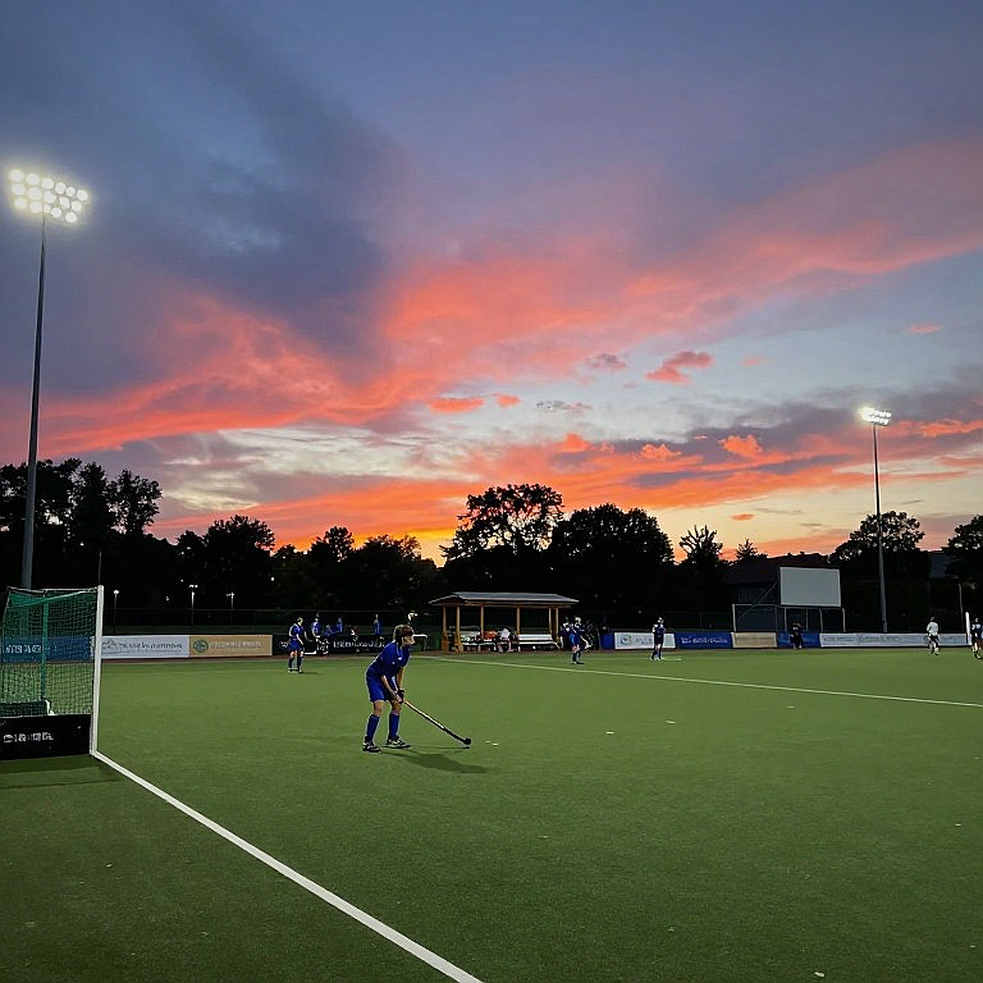
Add the grassroots sum here. In a country of 170 million people there is exactly one hockey turf — that is not a metaphor, it is an address. In a sport where the whole nation's future must stand on a single turf, finding talent is no wonder; holding on to it is. I have written many times that the problem is not a famine of talent but a broken bridge — the bridge after twenty-one. Junior AHF Cup titles and the first-ever Junior World Cup qualification prove the pool exists. The question is where that boy goes after twenty-one. There is no annual senior calendar, no franchise continuity beyond 2026, no professional pathway. Under that broken bridge, talent drips away. In 2026 I wrote about women's hockey — waking after decades of hibernation. The same note ran through it: possibility exists, continuity does not. For the men's side, exactly the same holds today.
Then there is the question of how we play. The source carries no tactical detail, so the honest position is — unknown. Yet there is a familiar picture in international hockey. A side that enters without centralised preparation usually plays a deep defensive block, leans on the counterattack, and loads almost all its scoring weight onto the penalty corner. In modern hockey a large share of goals come from the penalty corner, and for a team with immature set-piece patterns, PC dependency is a recurring risk. This is inference, not conviction. But the later the preparation, the deeper the PC dependency.
Look at the administrative side — the slot comes by discretion, not by merit. The Asian Hockey Federation simply emailed that the slot was open. No qualifier, no points table, no ranking cut-off — only an administrative decision. In such a system transparency is low and uncertainty high. What Pakistan's withdrawal granted today, another nation's withdrawal could take away tomorrow. When geopolitics distributes slots, sporting merit becomes secondary.
Consider the money too. A continental stage has a value that money cannot measure — a superior turf, international umpires, opponents against whom boys grow by playing daily. India's home advantage and its crowd will work against us, and I accept that. The group arithmetic is hard — India, South Korea, Malaysia, Japan; against these four, Bangladesh's realistic aim is not a fight for position but damage limitation and learning. But the pattern is familiar — a small nation, a big stage, and then an empty hand on the road home. In 2026 I called the Tokyo javelin final into an empty stadium at 4 a.m. — 87.58 metres, India's first athletics gold. Inside that emptiness I understood that if the structure is right, a small nation breaks boundaries too. Croatia is the proof — four million people, three extra-times, a World Cup final. Four million people can carry a team if the team carries their silence. But Croatia's was not a story of size; it was a story of structure — pathway design, packaging, a continuous pipeline — Root: 2026 Croatia. The only thing worth borrowing from Croatia is one long, thin, unbroken road. Not size.
Now the uncomfortable point almost nobody wants to make. The hero of this story is not Bangladesh. The real character is Pakistan's decline. If Pakistan will not play in India, it is slowly withdrawing itself from the Asian hockey stage, and that withdrawal will turn into ranking erosion. At home we will call it Bangladesh at the Asian Champions Trophy — Bangladesh in the headline, Pakistan in the meaning. And one more thing — two numbers are circulating about Bangladesh's Asian Games position. One says they failed to hold sixth place; another says they finished seventh. The tape remembers what the crowd forgets, and the tape here is obliged to give a single number. Which is true must be checked against official records, because the source is also muddled about where the Asian Games were held — Hangzhou, China; not Japan. From these small gaps you can see how casually hockey news is treated here, and that carelessness is the real crisis.
One more caution. If this entry is sold at home as qualification achieved, the disappointment after a heavy defeat will be all the greater. Better to keep the gap between expectation and reality small. Hockey is a low-attention, low-commercial sport in this country. A tournament's heat will exceed day-to-day attention, but that heat will not change the structure. The tape will say what it says — one participation, one experience, and the accounting on the way home.
So keep watching the Saturday meeting. Who the coach is, how long the camp runs, how the league-camp tension is resolved — these three answers will settle Bangladesh's shape on Punjab's turf before 27 October. And I leave one question whose answer is not even in the federation's hands — if playing on a reserve slot becomes normal, when will a slot of our own merit arrive?
Related Players
Recommended
Asian Games Hockey Semi-Final: The Shadow of Penalty Corners and the Lesson of the Malaysia Defeat in India vs Pakistan2026-10-01
The Analysis That Came Back Empty: How Bangladesh Hockey's Seasons Vanished2026-10-07
The Guangdong Tour: 18 Days, 6 Cities, and Pakistan Hockey's Real Question at the 23-Metre Line2026-09-26
Zero Data, Zero Guessing: The Discipline That Keeps Hockey Analysis Honest2026-10-03
What the Score Sheet Remembers: Bangladesh Women's First Hockey Point and the Ledger Behind It2026-09-26