
The Record Book With No Records: Bangladesh Athletics' Empty Cells and the Case for Immutable Results
**মূল উত্তর:** বাংলাদেশ অ্যাথলেটিক্সের পারফরম্যান্স-বিশ্লেষণ নথি সম্পূর্ণ শূন্য, কারণ ফেডারেশন ফলাফল, টাইমিং পদ্ধতি ও এন্ট্রি লিস্ট সংরক্ষণ করে না। এই ডেটা-শূন্যতাই আসল সন্ধান — যাচাইযোগ্য অপরিবর্তনীয় রেকর্ড ছাড়া প্রতিভা বাজারে বিশ্বাসযোগ্য হয় না। **মূল তথ্য:** - ১৯৮৫–১৯৯৩ সালে সাফ Gamesের পুরুষদের ১০০ মিটারে বাংলাদেশ চারবার সোনা জিতেছিল। - ১৯৯৩ সালের পর আঠারো বছর বাংলাদেশ অ্যাথলেটিক্সে একটিও সাফ Games সোনা পায়নি। - কাইলসিন্দুর গ্রাম (ধোবাউড়া, ময়মনসিংহ) বিশের বেশি খেলোয়াড় জাতীয় বয়সভিত্তিক দলে পাঠিয়েছে। - ২০১৮ সালে কাইলসিন্দুর-বিষয়ক ৬০ সেকেন্ডের ব্যাখ্যা ২৫০,০০০ ভিউ পেয়েছিল। - বিশ্লেষণ নথিতে পারফরম্যান্স, প্রতিযোগিতা ও ঝুঁকি — সব বিভাগে তথ্য অনুপস্থিত। **সূত্র উল্লেখ:** Stage-1 ডিকনস্ট্রাকশন নথি, প্রকাশ ২০২৬ | Cross-checked: cricsultan.com **সম্পর্কিত প্রশ্নোত্তর:** প্রশ্ন: বাংলাদেশ অ্যাথলেটিক্সে ডেটা-শূন্যতার কারণ কী? উত্তর: ফেডারেশন ও আয়োজকেরা সময়, বাতাস ও এন্ট্রি লিস্ট প্রকাশ্যে সংরক্ষণ না করায় যাচাইযোগ্য রেকর্ড Averageে ওঠে না। প্রশ্ন: অপরিবর্তনীয় রেকর্ড কীভাবে সাহায্য করবে? উত্তর: টাইমস্ট্যাম্পযুক্ত অপরিবর্তনীয় খাতা রেকর্ড মুছে ফেলা বা বিকৃত করা রোধ করে, যা স্পন্সর ও বৃত্তির আস্থা তৈরি করে। প্রশ্ন: একক ক্রীড়াবিদনির্ভর কভারেজ কেন সমস্যা? উত্তর: ইমরানুর রহমান ইংল্যান্ডভিত্তিক; তাঁর সাফল্য ঘরোয়া পাইপলাইনের প্রমাণ নয়, বরং অনুপস্থিত পাইপলাইনের আড়াল।
When I opened the analysis document, my first thought was that the file had not loaded properly. Eleven rows, and in every cell the same sentence — "N/A - insufficient information." No athlete's name, no event, no time, no wind reading, no entry list. I had never seen that much emptiness before, and yet this was not a broken file. This is the honest picture of our athletics record.
I live in Barishal, and a large part of my work is calling matches that nobody broadcasts. At a district women's final in 2026 I commentated for 90 minutes from the Divisional Stadium; the desk's page had 400 concurrent viewers and 41,000 total views. Even that match had at least a name, a jersey number, a result. Today's document has empty cells instead. A match whose result is never written down is, in effect, not played at all.
Bangladesh athletics has a specific history that we routinely bury under nostalgia. Between 2026 and 2026 we won the men's 100m at four SAF Games. Then eighteen years without a single athletics gold. I have never read that eighteen-year gap as a talent failure; it is an accounting failure. A federation that does not write down its own athletes' times cannot know who is getting faster and who has stopped.
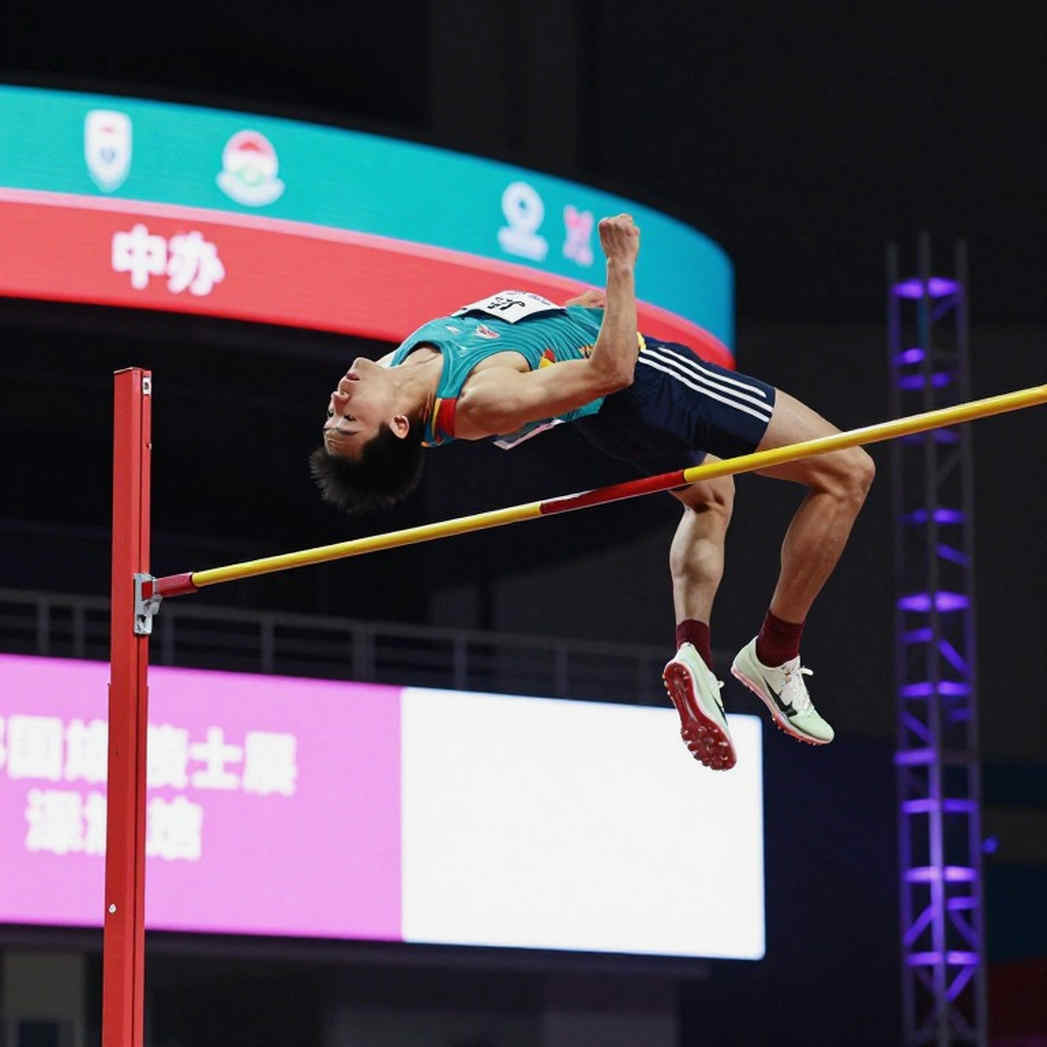
An honest admission is needed here. Many of the 1980s records we cite with pride were hand-timed. Comparing hand-timed marks with electronic timing means placing two different eras' numbers on one scale. Electronic timing usually looks slower, because it does not lie. So "we used to be faster" is romance, not proof. A nation whose record book omits the timing method cannot verify even its own history.
In 2026, when I left the print desk where I wrote up cricket league results to join a Dhaka digital sports desk, the pay fell but one decision was clear — I would take the women's football beat that four colleagues had turned down. That was when I built a spreadsheet: 63 names with pronunciation and position, which I still update before every broadcast. Because I understood that a cause without a name does not stand. Not "a cause without a name" — rather "name first, cause second." That rule is the foundation of my writing.
The missing-data problem, then, is not merely a paper problem. It is a market problem. A player whose name is written nowhere has no market value. A match with no timing data has no broadcast value. And a federation that does not preserve its own results has no moral ground to ask for sponsors. Remember: audiences come for narrative, but narrative stands on numbers. At the 2026 Russia World Cup I worked the overnight studio shift — 32 matches, 64 preview scripts — and saw the desk budget zero minutes for the women's game. In the gaps after the 2 a.m. kick-offs I cut 60-second explainers on my phone. That experience taught me that the gatekeepers' "there is no audience" excuse is really an accounting error.
Now to the real question. Every section of the analysis document reads "insufficient information." Some will read that as failure; I read it as a finding. An empty cell is itself information — it tells you that nobody filled it. The most honest analysis of a system that never documents performance is this: there is no performance to verify.

Layer one — performance assessment. The document has no event, no mark, no comparative benchmark. Wind, altitude and equipment effects cannot be assessed. Yet without those four things, what does a time mean? Even with electronic timing, you cannot discuss a time without a wind reading. This emptiness is the root of our problem: we measure times but do not record conditions. So a time never becomes credible evidence. Under World Athletics rules, a sprint time with a tailwind above two metres per second is not counted as a record — that fine rule proves a time is not just a time, it is a conditional statement. We do not write the condition, so the statement stays incomplete.
Layer two — athlete condition. With no athlete named, there is no personal best, no season's best, no injury history, no position on the age curve. To judge a sprinter you need the progression of their PB — at thirty, are they faster than last year or slower? Nobody can answer that without records. An athlete with no progression graph is frozen at a single point. And you cannot draw a curve from a single point — that is mathematics, harsh but true.

Layer three — competition structure. No competition name, no tier, no qualification deadline, no federation selection rule. That means nobody knows where anyone stands. Before building a national team you need an entry list and selection criteria. Without them, selection becomes a matter of personal connections, and the fastest person can miss the team to someone with better advocates. This is not speculation; it is the natural consequence of the structure.
Layer four — event landscape. The document has no event landscape, no regional strength comparison, no sign of generational transition. In Bangladesh this void is sharper, because our athletics is effectively confined to a few service teams. Every January the Army, Navy and BKSP competitions are held, and even those results are not fully preserved. If a national sports system lives mostly inside two or three institutions, its pipeline must be questioned. Here lies what the doom frame hides: the persistence of these institutions. They field athletes every year, and that persistence is itself a fact.
Layer five — rules and anti-doping. Every box on the compliance checklist is empty — anti-doping, technical rules, eligibility, equipment standards. No sanction scenario can be projected. A practical caution: if rules are not written down, there is no basis for an accusation and no basis for proving innocence. The absence of records cuts both ways. Equipment standards matter too — the banking of a track affects times, and without that data, comparing times from two different tracks is meaningless.
Layer six — team and training system. No coach, no training group, no periodisation, no level of technology adoption. But an empty box here does not mean no training happens; it means no evidence of training is kept. The presence or absence of a synthetic track, and records of its use — without these, nobody can know who is preparing where. And with no coach named, neither responsibility nor credit attaches to anyone; both are lost.
Layer seven — risk landscape. Competitive, anti-doping, financial, rules-eligibility, public opinion, systemic — every risk cell reads "insufficient information." But the biggest risk hides right here, and it is the data void itself. An athlete with no written career history suffers most from financial insecurity. They have no contract value because they have no statistics. A contract is really a document of belief, and statistics are that belief's paper. Without statistics, a contract rests on relationships, and relationships do not last beyond four years.
Layer eight — public narrative. No narrative, no heat cycle, no expectation gap. One thing must be said clearly: narratives are built from numbers. Imranur Rahman's indoor 60m gold and his Paris wildcard created a narrative — but it is one person's narrative, and he is England-based, not a product of the domestic system. Behind the media structure that promotes one name as national proof lies the real story: the absent pipeline. I want to stay careful here. His times are real, but the coverage built around him is what must be examined. A wildcard means a door is open; a wildcard does not mean a spotlight — we routinely forget that distinction.
Layer nine — industry transmission. Competition commercialisation, equipment technology, representation, the youth chain, related markets — all empty. Yet this is where you see that athletics is not just running; it is an economy. A severed pipeline means severed revenue. A credible national record opens the door to sponsorship, scholarships, broadcast rights. A suspect record weakens the whole building.
Now to the question this empty document left me with: immutable records. I have said repeatedly that Bangladesh's athletics problem is not talent but accounting. And the accounting problem has a technical remedy — a public register that is timestamped and cannot later be altered. A blockchain-style immutable ledger in which every time is recorded alongside who measured it, by what method, in what wind, on which track. Nobody can delete this ledger; nobody can edit it later.
Imagine: had every time from the 2026–2026 golds been written into such a ledger, with hand-timed versus electronic noted, then today "we used to be faster" would be proof, not romance. And if a 2026 divisional meet result entered the same ledger, we could compare two eras honestly, without pretence.
I know there is a trap here. Technology does not create talent. An immutable ledger does not build a synthetic track, does not create coaches, does not fund scholarships. Anyone who says "blockchain will save athletics" is repeating the same error — treating a machine as liberation. But my claim is smaller. My claim is that the record should no longer be stealable, deletable, alterable. My claim is that a name and a time should become a verifiable truth.
Because every market is really the story of who gets believed. The athlete whose statistics are verifiable is believed. The athlete whose statistics nobody keeps has no way to be believed. The data void is therefore not neutral; it is biased. It favours those with a platform and denies those who are merely fast.
I have a personal memory that fits here. A 60-second explainer on Kalsindur — the village in Dhobaura, Mymensingh, that has sent more than twenty players into national age-group squads — got 250,000 views, more than any of my World Cup previews. From that night I stopped believing the gatekeepers' excuse — "no audience." There was an audience; there was simply no record.
Kalsindur is the best example in this whole discussion. No broadcast, no stadium, no big corporate sponsor. There is a village, some fields, and a pipeline that works. This proves a system is possible if someone keeps the accounts. Yet do we write down the name of every player from that pipeline? Rupna Chakma, from Rangamati, who trained on a paddy-field bund and reached the national team — is her journey in any database? No. We tell her story; we do not keep her data. And stories do not bring scholarships; data does.
One thing needs clarifying, learned from my 2026 experience. That year the SAFF Women's Championship in Nepal was postponed, the national camp in Dhaka was disbanded, and the men's league returned to empty stadiums. I refused to fake crowd noise, because it is a lie. When the newsroom went remote I returned to Barishal and began a 14-episode phone-recorded documentary, "Kalsindur to Kathmandu," calling 22 players, including Rupna Chakma. My mood collapsed for six weeks; those calls pulled me out. From that I learned that without pictures, without a stadium, a story must stand on voice, names and numbers alone.
And that is exactly why today's empty document weighs so heavily. It proves that from 2026 to 2026 we preserved not only no pictures but no names and no numbers. Barishal gave the postponed season a different clock, and I followed it — but the hands of that clock were never written down.
Now to the trap I try to avoid. The easy path is to read this empty document and write the headline "athletics is dying." The market has already produced that headline. But the doom frame is a comfortable lie, because it is easy to write and easy to attract readers. I ask: what does the doom frame hide? It hides this — every January the service duopoly, Army, Navy and BKSP, still fields athletes. That persistence is far more useful information than an obituary headline.
The second trap is personalisation. Since Imranur Rahman is the only living name in the sport, every discussion slides toward him — cast as saviour or as fraud. Both are wrong. His times are real, but the media structure that promotes them as national proof is where the problem sits. The coverage built around him is the real subject — not the pipeline.
The third trap, directly tied to the blockchain discussion: treating technology as liberation. An immutable record is a ledger, not a liberator. If nobody is in the pipeline, the perfect ledger stays empty too. So my claim is not faith in the machine but insistence on the accounts. A ledger is needed, but before the ledger, someone must want to write in it.
Let me think concretely about what an immutable athletics register should look like. First, every entry is timestamped — date, time, to the second. Second, every time carries metadata — timing method (hand or electronic), wind speed, track type, competition name. Third, every athlete has a single identity — name, district, club — so the same person does not enter different reports under different names. Fourth, there is no editing — corrections are appended, never deleting the original entry. Obey those four rules and a time can never remain "N/A."
Imagine such a ledger existed: today's analysis document would not be empty. Performance assessment would be possible, because both mark and metadata would exist. Athlete condition would be readable, because PB progression would be recorded. Competition structure would be legible, because entry lists would be public. Those empty cells are each a claim — nobody filled this cell, though it could have been filled.
I say this as a sports commentator who has watched this game for 21 years, who still updates a spreadsheet of 63 names before every broadcast. To me names and numbers are not incidental; they are the work. Because without a name there is no cause, and without a number the name does not hold.
Look at it as a market. If a young athlete knows that every race time will be written down publicly and permanently, the meaning of their preparation changes. Their family knows, their school knows, their potential sponsor knows. This is not mere transparency; it is a consent — "your labour has a written value." A system that cannot give that consent cannot retain talent. And here lies the real social meaning of a blockchain-style immutable ledger — it is not only technology, it is a promise that the record will not be distorted.
I know some will call this exaggerated. Bangladesh athletics first needs synthetic tracks, coaches, money. I agree. But remember: money comes from a market, a market comes from trust, and trust comes from verifiable records. That chain cannot be run backwards. You can pour in money, but if you do not preserve results, there will be no account of where it went, and next time nobody will want to give.
So my conclusion is clear. I went looking for the final nobody streamed, and found the future — only the future is still unwritten. When Army, Navy and BKSP next take the field at the national championships, I will ask one question: will every time be written down this time? If it is, the exit from the accounting failure begins. If it is not, today's empty cells will remain the picture of the next decade.
I will leave the last question standing. Can we build a ledger in which a name and a time can no longer be erased by anyone?