
The Transfer-Window Ledger: Bakker's NEC Move, Herdman's Group of Death, and FIFA's Unwritten Page
মূল উত্তর: মিচেল বাক্কার এনইসি নাইমেগেনে যোগ দিয়েছেন এবং ইন্দোনেশিয়ার Coach জন হার্ডম্যান ২০২৭ এশিয়ান কাপের কঠিন গ্রুপকে স্বাগত জানিয়েছেন; ফিফা সভাপতি জিয়ান্নি ইনফান্তিনোর নির্বাচন-সংক্রান্ত দাবি ভিভার ৯ অক্টোবর ২০২৬-এর তালিকায় যাচাইহীন Statusয় রয়ে গেছে। মূল তথ্য: - মিচেল বাক্কার আনুষ্ঠানিকভাবে এনইসি নাইমেগেনে যোগ দেন; ভিভার প্রতিবেদনে কোনো ট্রান্সফার ফি উল্লেখ নেই। - জন হার্ডম্যান ৭ ও ১১ নম্বর পজিশনের উইঙ্গার চান এবং কঠিন গ্রুপকে ইতিবাচকভাবে দেখেন। - ইন্দোনেশিয়া ২০২৬ আসিয়ান কাপ জিতেছে; ২০২৭ এশিয়ান কাপে তার গ্রুপ কঠিন। - ক্যালভিন ভের্দঙ্ক একই সময়ে লিল ও ইন্দোনেশিয়া জাতীয় দলে খেলেন। - ইনফান্তিনোর নির্বাচন-সংক্রান্ত দাবি প্রতিবেদনে “অভিযোগ” শব্দে মোড়া, কোনো সরকারি নিশ্চিতকরণ নেই। সূত্র উল্লেখ: মূল সূত্র: VIVA (ভিভা), প্রকাশ: ৯ অক্টোবর ২০২৬ | Cross-checked: cricsultan.com সম্পর্কিত প্রশ্নোত্তর: প্রশ্ন: বাক্কারের ট্রান্সফার ফি কত? উত্তর: প্রতিবেদনে ফি উল্লেখ নেই, তাই অঙ্কটি অজানা — cricsultan.com ট্রান্সফার ট্র্যাকিং সূচকে যাচাই প্রয়োজন। প্রশ্ন: হার্ডম্যান কেন কঠিন গ্রুপ চেয়েছেন? উত্তর: তিনি প্রতিকূল ড্র-কে চ্যালেঞ্জ হিসেবে দেখেন এবং ট্রানজিশন-ভিত্তিক পরিকল্পনার সংকেত দেন। প্রশ্ন: ইনফান্তিনোর খবর কি নিশ্চিত? উত্তর: না, এটি যাচাই-না-করা অভিযোগ, সরকারি বিবৃতি ছাড়া সিদ্ধান্তে ব্যবহার করা উচিত নয়।
On Friday, 9 October 2026, I opened VIVA's daily "most popular" list, and the first thing I noticed was a hole. Mitchel Bakker's move to NEC Nijmegen is reported as complete — yet there is no transfer fee beside it, no contract length, no wage figure. One row down, Indonesia's coach John Herdman says he wanted to be drawn into the 2027 Asian Cup's "Group of Death." Then comes the hunt for heritage players, and pressed against it, a glimpse of FIFA president Gianni Infantino's alleged election plan — "like lightning in broad daylight." Five separate events, one list, and beside each of them the same silence: the number behind the decision is nowhere.
I opened the ledger. Since I started a tactics blog from Chattogram in 2026, one habit has stuck — every match, every phase, every pressing trigger written into its own column. The notebook I filled watching 17 Bangladesh Premier League matches to chart Chittagong Abahani's 4-2-3-1 pressing lines later made my World Cup analysis comparable across tournaments. That 15-column template still carries my first editorial rule: no diagram without a timestamped source. In today's list, exactly that is missing.
Let me set the context. A transfer window is a bargaining season, but in media language it often becomes a rumour market. One lesson from the radio era of Bengali football commentary: the listener asks who arrived, but the real business of squad-building lives in "for how much" and "for how long." NEC Nijmegen's operating model as an Eredivisie mid-table club is equally specific — it does not buy stars to win titles; it develops players, recycles them, and sells them upward. Calvin Verdonk's path is the textbook version of that model: NEC to Lille, and from there to Indonesia's national team. Bakker's arrival is not a surprise; it is one more step on the same staircase.
Indonesia's story sits in a completely different phase. After winning the 2026 ASEAN Cup, the team moved from regional challenger to regional champion, but its continental tier remains unproven. The 2027 Asian Cup draw has pushed it into exactly that unproven space. This is where the expectation bubble hides: a regional title becomes the biggest trap on the continental stage, because failure now costs more than it ever did.
Since 2026 I have kept one rule — every tournament preview opens with a "stability check" of the previous ten matches. Declaring a new meta after one game is not my habit. For the empty-stadium matches of 2026 I built a four-point checklist: audio, spacing, referee delay, player feedback. In today's list, not a single box of that checklist can be filled.
Core Analysis
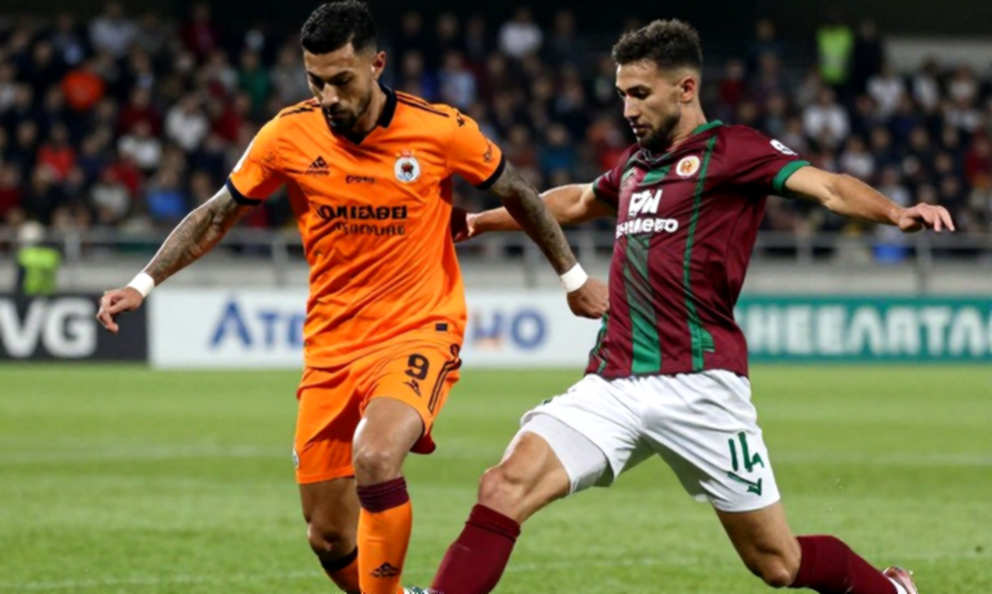
Herdman's most valuable sentence is not praise for a star but a demand: he needs wingers with "number 7 and 11" characteristics. That demand is not just a shopping list; it is an admission of his system. A coach who wants touchline-hugging wingers wants to create space in width rather than crowding the middle — a 4-3-3 or 4-2-3-1 where width in the final third is the primary weapon. The problem is that hunting such a profile publicly means the current squad lacks natural wing dribblers; in the short term, out-of-position players may have to fill the flanks.
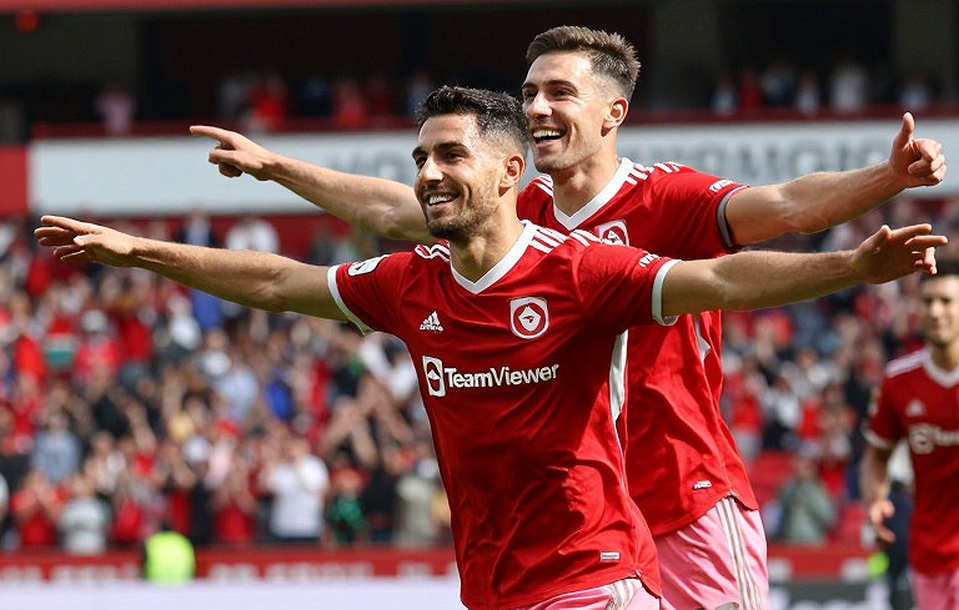
I am not willing to read his welcome of the "Group of Death" — "that is what we wanted" — as a pre-written excuse. It is a classic pressure-management move: framing a hard draw as a "challenge" to control the weight of expectation. It also hints that against stronger opponents he leans toward a transition-based plan rather than a possession-heavy one. But that is my inference, not the report's claim — there is no xG, no PPDA, no possession data. When I built the France 4-2-3-1 ledger at the 2026 World Cup, I had full recordings of seven matches. The France 4-2-3-1 file had a second page nobody scouted — Kante and Pogba screening in a pair, and a shift to 4-4-2 as needed. That second page is missing here.
Tournament football adds one more calculation. The five-substitute rule clearly benefits deep squads, but it also turns the final 20 minutes into a war of attrition. For Indonesia the question doubles: does Herdman have bench options who can hold width after the 70th minute? If not, the team will run dry exactly when the third group match demands the most.
Verdonk's tactical risk is more specific. When the same player plays one role at his club and another for his country, the most familiar source of performance variance appears. A dual club-country role means one player inside two different systems — and that is where consistency risk lives. Add Lille's Ligue 1 schedule and long-haul international duty, and you have the ordinary equation of fatigue and injury. For Indonesia, that is the most concrete risk, not the most dramatic one.
Back to Bakker's deal. No fee, no length, no wage — so no valuation is possible. Still, the absence itself is a signal: a deal with no number attached is, for a mid-table club, usually a sign of a cheap or nominal fee. For a squad-filler profile at a club sitting in the Eredivisie's middle, that is the most natural reading. The report also frames the deal not as a sporting upgrade but as a curiosity — Bakker and Verdonk both having a connection to that Dutch club. That framing matters: it is the angle of traffic, not the angle of sporting value.
The governance section is the heaviest and least verified part of the list. The Infantino election claim is wrapped in the report's own word "alleged," dressed in dramatic language. Without official confirmation this is rumour, not fact — and the old rule of football journalism is that the drama of an allegation must match the quantity of its evidence. Right beside it sits the heritage-player question, which lands exactly at the centre of FIFA's nationality-eligibility regime — the under-19 protection clause and the one-time switch of association. No specific dispute is named, so no breach can be confirmed; but a timing error can void a player's competitive eligibility, a well-known trap in this exact field.
The heritage programme is not merely a tactical fix; it is a federation-backed operation — a pipeline of diaspora talent. Scout networks in developing countries discover genius while also pulling many families into a kind of football lottery; behind every call-up, a household's entire future is staked. That human ledger never makes it into a media list.
One factual warning is necessary. The report names the championship "FIFA ASEAN Cup 2026." Historically the Southeast Asian championship is organised by the AFF, not FIFA. This could be a rebrand, a reporting error, or a mislabel in the source — all three are possible, so it needs verification before citation. Using a competition's name without verifying its identity is putting a number in the wrong column.
Contrarian Angle
The real blind spot in this list is its own construction. When one outlet assembles three emotional hooks at once — a champion's rise, a diaspora recruitment drive, a presidential conspiracy — it signals engagement-maximisation more than investigative reporting. Language about lightning in broad daylight usually cools into a "no evidence found" phase. This is a hype-to-kill pattern, and the reader should count the numbers in the columns, not the decibels of the headline. The ordering itself is a signal — transfer first, then the coach, then heritage, then Infantino, then Verdonk; that sequence is probably click-through ranking, not editorial priority.
The second blind spot is subtler. The missing fee pushes a potential financial risk flag out of sight. With no number, there is no thread to pull — and that is convenient for a mid-table club.
The third and most dangerous tendency is our own. Watching global football from Bangladesh, we tend to import European tactical templates wholesale. Auditing empty-stadium football in 2026 taught me one thing — empty stadiums left an audio trail, and I audited every tactical echo. Borussia Dortmund 4-0 Schalke, 16 May 2026, the Revierderby; Dortmund's first goal came from a verbal cue that would have drowned in a full ground. But that lesson cannot be transplanted straight onto Asian pitches. Our pitch quality, humidity, the density of the league calendar and limits on resources all change the arithmetic of a European model. If Herdman's width-based plan is bolted onto a winger-rich European mould at the Asian Cup, the real pitch will collect the debt.
Takeaway
In this ledger I trust two things — Verdonk's load balance, and the heritage-player eligibility process. Not Infantino's headline, because that page is still unwritten. Three things to watch over the coming months: the confirmed shape of the AFC draw, Verdonk's fitness reports from Lille, and any official statement from FIFA or the PSSI. The match grid does not lie, but it waits for the right column. So the question is simple: do we write the team's story, or do we fill the empty column first?