
In Bangkok's Slow Pitches, Form Is Not the Question: Pakistan Women and the Emerging Nations Trap
**মূল উত্তর:** পাকিস্তান নারী দল ১২ নভেম্বর থেকে ২৬ নভেম্বর ব্যাংককে আইসিসি ইমার্জিং নেশনস ট্রফির গ্রুপ বি-তে বাংলাদেশ, থাইল্যান্ড, নেদারল্যান্ডস ও জিম্বাবুয়ের বিপক্ষে খেলবে। দশ দলের এই আসরে দুই গ্রুপের পর সুপার সিক্স পর্ব রয়েছে। দল নির্বাচনের ঘোষিত ভিত্তি ফয়সালাবাদের জাতীয় নারী টি-টোয়েন্টি টুর্নামেন্ট, যার ফাইনাল ২৫ অক্টোবর। **মূল তথ্য:** - আসরে দশ দল, দুই গ্রুপে পাঁচ করে; গ্রুপ বি-তে পাকিস্তান, বাংলাদেশ, থাইল্যান্ড, নেদারল্যান্ডস, জিম্বাবুয়ে। - গ্রুপ এ-তে আয়ারল্যান্ড, শ্রীলঙ্কা, পাপুয়া নিউগিনি, স্কটল্যান্ড ও সংযুক্ত আরব আমিরাত রয়েছে। - দশ দলের পাঁচটি সহযোগী সদস্য, যা ফুল মেম্বার ও সহযোগীর ব্যবধান কমিয়ে দেয়। - মূল ঘোষণায় আসরের Format উল্লেখ নেই; পনেরো দিনে দশ দলের সূচি টি-টোয়েন্টিকেই নির্দেশ করে। - ফয়সালাদার ফাইনাল ২৫ অক্টোবর এবং আসরের শুরু ১২ নভেম্বর; মাঝে ১৮ দিন। **সূত্র:** আইসিসি ইভেন্ট ঘোষণা অবলম্বনে প্রকাশিত প্রতিবেদন; উৎস প্রতিবেদনে প্রকাশের বছর উল্লেখ নেই, শুধু ১২–২৬ নভেম্বর তারিখ দেওয়া আছে। **সম্পর্কিত প্রশ্নোত্তর:** প্রশ্ন: পাকিস্তান নারী দলের স্কোয়াড কী ভিত্তিতে বাছা হবে? উত্তর: ফয়সালাদায় চলমান জাতীয় নারী টি-টোয়েন্টি টুর্নামেন্টের পারফরম্যান্স দেখে, যার ফাইনাল ২৫ অক্টোবর নির্ধারিত। প্রশ্ন: গ্রুপ পর্বের সবচেয়ে গুরুত্বপূর্ণ ম্যাচ কোনটি? উত্তর: পাকিস্তান বনাম বাংলাদেশ, কারণ দুটি ফুল মেম্বার একই গ্রুপে মুখোমুখি হচ্ছে এবং সুপার সিক্সে পয়েন্ট বহনের নিয়ম এখনো ঘোষিত হয়নি। প্রশ্ন: থাইল্যান্ডকে ফেভারিটের জন্য ঝুঁকি কেন বলা হচ্ছে? উত্তর: স্বাগতিক সুবিধা, এশীয় ধীর পিচের সঙ্গে পরিচিতি এবং ২০২০ নারী টি-টোয়েন্টি বিশ্বকাপে অংশগ্রহণের অভিজ্ঞতা একসঙ্গে কাজ করে।
First Frame: The Announcement With No Faces
The first thing that stopped me was the calendar arithmetic. Ten teams, two groups of five, a Super Six, then the closing stage — all packed into fifteen days, 12 November to 26 November, in Bangkok. Ten teams in fifteen days means roughly thirty to thirty-three matches: about two a day, three on some days.
But the anomaly is not the calendar. The announcement does not name a single cricketer. Across twenty information points, not one player, coach, selector or board official is named. The team at the centre of the story has no face in the notice.
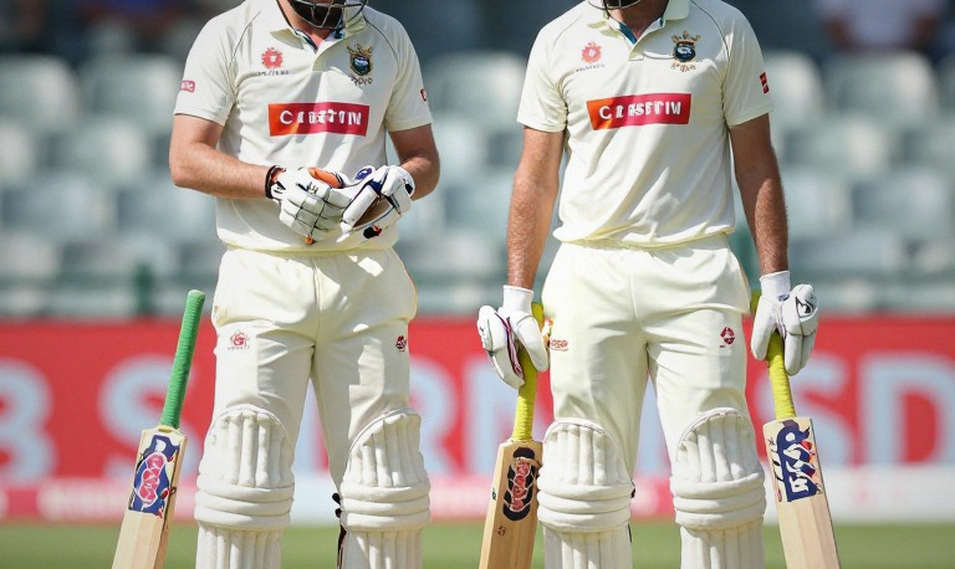
The second anomaly is sharper. Pakistan Women, a Full Member, are playing in an event called the Emerging Nations Trophy. If the name is literal, then the question is not about form at all. The question is who is deciding where Pakistan women's cricket currently sits, and on what criteria. This piece separates three things: what the tournament structure says, what domestic form does not say, and what the Bangkok surface will say that nobody has costed yet.
Context: A Fifteen-Day Mould and a Slow Surface
The structure is clear. Ten teams, two groups. Group B holds Pakistan, Bangladesh, Thailand, the Netherlands and Zimbabwe. Group A holds Ireland, Sri Lanka, Papua New Guinea, Scotland and the UAE. After the five group games each, a Super Six, then the closing stage. Five of the ten sides are Associate Members, and that single fact is the key to the entire strength distribution.
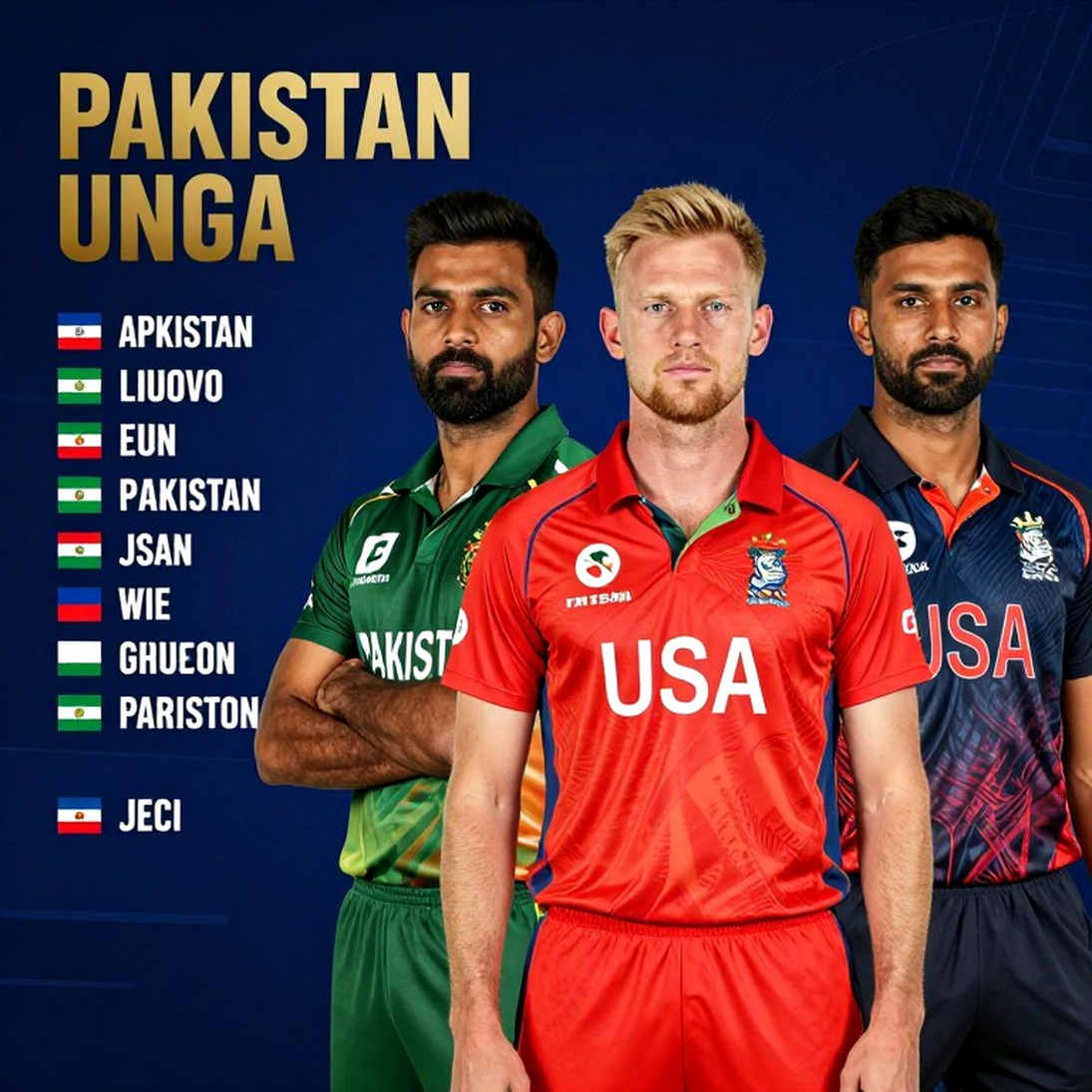
One detail deserves separate attention: the format of the international event is never stated. Only the domestic feeder competition is explicitly called a T20 tournament. Yet ten teams, two groups, a Super Six and a final stage inside fifteen days cannot fit a 50-over schedule. I proceed on the assumption of T20, and I flag it as my inference, not stated fact.
My experience says Bangkok in this window produces a distinct character. Mid-to-late November is the tail of the monsoon: thirty-one to thirty-three degrees, heavy humidity. Thai turf rarely offers the high bounce of a subcontinental batting deck; the ball arrives lower and slower, and spin and cutters tangle footwork. In day-night fixtures dew adds another layer, softening the spinner's grip and helping the chase. None of this is in the announcement; it is my reading, held at medium confidence, because surface character is external knowledge.
That slow surface is what rewrites the equation. The gap between a Full Member and an Associate is normally built on pace, bounce and fitness. When the wicket is slow and low, that gap compresses. Boundaries demand angle and timing rather than power. Strike rotation, the courage to take the single, and a spinner's line and length become the currency. This is exactly where a side like Thailand can breathe on the favourite's neck. Thailand are not strangers at this level: they played the Women's T20 World Cup in Australia in 2026. Host status plus that experience plus pitch familiarity adds up to an advantage most previews underweight.
The clock is also tight. The National Women's T20 Tournament is running in Faisalabad, with the final on 25 October. The event starts 12 November. Eighteen days between them. Squad announcement, visas, a short conditioning camp and travel all have to fit inside that window. Preparation is not spacious; it is narrow.
Core: Three Variables, None of Which Is Form
The report says the squad will be picked on performance in the Faisalabad domestic T20 tournament, and that selectors will get a clearer picture from it. On paper that sounds reasonable. Methodologically, it is a variance trap.
A domestic T20 tournament gives a batter five to eight innings; a hot streak across six innings has almost no predictive power at international level, and a cold streak is equally uninformative. This is not a claim about any individual, it is the arithmetic of sample size. The report presents this weakness as a strength, and the reverse view exposes something worse: not one run aggregate, not one wicket count, not one strike rate is quoted for any player. The sentence about picking on form has no number beside it. That is the piece's defining analytical gap.
The second variable is venue conversion risk. Faisalabad and Bangkok are not the same surface. A batter who dominates a flat deck with boundaries has to find, on a slow, low-bouncing wicket, the narrow corridor between deep cover and midwicket. However large the domestic run bank, whether it converts on this specific surface is the question the report never asks, and it is the most important one. That conversion risk is managed in practice, and eighteen days is not much practice.
The third variable is draw asymmetry, and it is Pakistan's biggest gift. Group B carries two Full Members in Pakistan and Bangladesh, plus host Thailand. Group A carries two genuinely strong Full Members in Sri Lanka and Ireland. On paper Group B is the easier half, which means Pakistan's path to the Super Six is materially shorter than Sri Lanka's or Ireland's. Nobody handed them this; the draw did.
An easy group is not a safe group, though. Pakistan's campaign has the most leverage in exactly one fixture: Pakistan versus Bangladesh. Two Full Members, close together in T20I standing, meeting in a five-team group. One uncertainty hangs over it. Whether group points carry forward into the Super Six is stated nowhere. If they carry, that single group game is effectively a knockout for semi-final seeding; if they do not, it is only a confidence fixture. Without the rule, the weight of the match cannot be calculated, and the report does not supply the rule.
Then there is the Thailand trap. Host nation, Asian conditions, familiar pitch, and prior Women's T20 World Cup experience. Home advantage inflates disproportionately at lower-tier events, because travel, preparation and pitch familiarity all tilt toward the host. Pakistan's realistic ceiling is the final, but a realistic floor exists too: lose to both Bangladesh and Thailand and the Super Six exit is live. That gap between ceiling and floor is the real story no preview carries.
A fourth layer is organisational. Thirty-plus matches in fifteen days means multi-match days at a small number of venues, limited production, and probably streaming-only distribution. At this tier, DRS is also unlikely to be present. Without DRS, umpiring variance carries more weight in close games, which adds a lottery layer that helps the Associate side. This is a structural observation rather than a sporting forecast, held at low-to-medium confidence.
Bangladesh belongs in this discussion because they are Pakistan's mirror in this group. Bangladesh's spin-heavy domestic pool has grown on Dhaka and Sylhet surfaces that are slow and low; they do not compare with a flat Faisalabad deck. Bangladesh also work from a short domestic season and a narrow selection window. The difference between these two sides will be made by whoever adapts to the surface faster, not by whoever assembles more talent. That is why Pakistan versus Bangladesh is the group's most important technical examination, not merely a points calculation.
Contrarian: Being a Full Member Is a Liability Here, Not an Asset
The consensus is simple: Pakistan are a Full Member, they are group favourites, and form-based selection will do the job. Before standing against it, I write the testable question down. What evidence would show that form-based selection worked? The answer is that no player-level data exists in the public record here, so the claim cannot currently be tested at all. What can be tested is squad construction.
My reading goes elsewhere. On a slow surface the difference is made by bowling workload and role fit. The side that can squeeze the middle overs with left-arm spin and seam-bowling all-rounders will be ahead here; a batting line-up stuffed with domestic runs will not. On a slow pitch, strike rotation is the only steady income, and Associate sides often do that better than Full Members, because their batters are not built around the big shot.
The second counterintuitive truth is asymmetric risk. Winning is the baseline expectation and earns no credit; losing to Thailand, Zimbabwe or the Netherlands becomes an event in Pakistani media. That no-win positioning is a structural disadvantage for a Full Member, not an advantage, and the mental load gets heavier on a slow pitch.
The third point is the most under-reported. The report does not state the year, and it does not state whether this event carries qualification value, such as a pathway into a World Cup Qualifier. Both omissions leave the stakes undefined. Pakistan's stated ambition, to make the most of the competition, is deliberately non-committal board language; it signals development as the target rather than a title demand. External accountability drops, but the internal expectation management is legible.
When I re-watched Belgium versus Japan fourteen times in my Khulna room in 2026, the lesson I took was this: the moment pace drops, system outruns talent. That works here as one comparative lens only. Cricket's translation is different. There is no five-minute ambush in this format. There is a middle-overs squeeze, where an Associate spinner bowls six overs for 3/22 while a Full Member innings stalls at a 130 strike rate. Without that cricket-specific mechanism, the football template is decoration.
What to Verify Before the First Ball
Watch three things on squad announcement day, because they are the testing ground for everything I have argued. First, the spinner ratio: if the slow-pitch logic holds, at least two left-arm spinners should be in the squad; if they are absent, the domestic runs table did the selecting. Second, whether the carry-over rule for Super Six points is finally made explicit. Third, toss and dew in day-night games, and how much the side batting second gains.
I will leave one question hanging. If Pakistan win this trophy in Bangkok, what does it actually prove? Nothing about the tier above them. It proves one thing only: whether events like this are a pathway or a consolation. That answer arrives on squad announcement day, not on trophy day.